You’re setting up a home office or upgrading your workspace, and one question keeps coming up: how tall is an office desk? It seems simple, but getting the height right affects your comfort, posture, and long-term health. A desk that’s too high or too low can lead to wrist strain, back pain, and reduced productivity. The standard office desk height typically ranges from 28 to 30 inches (71 to 76 cm)—a measurement designed to fit the average adult when seated in a standard office chair.
But “standard” doesn’t mean “ideal” for everyone. Your ideal desk height depends on your height, chair design, and how you use your workspace. Whether you’re 5’2″ or 6’4″, sitting or standing, this guide breaks down everything you need to know to find your perfect desk height. You’ll learn standard dimensions, how to measure for your body, and what to do if off-the-shelf desks don’t fit.
Standard Office Desk Height Range
Most traditional office desks are built to a one-size-fits-most standard: 29 to 30 inches tall. This range accommodates the average seated user, especially when paired with an ergonomic chair and proper monitor placement.
Who Fits a 30-Inch Desk Best?
The 30-inch desk works best for people between 5’8″ and 5’10”. If you fall in this range, a standard desk should allow you to:
• Sit with elbows at 90 degrees
• Keep wrists straight while typing
• Rest feet flat on the floor
If you’re shorter or taller, the standard height may force awkward postures—like hunching or shoulder shrugging—that lead to discomfort over time.
Why Manufacturers Stick to 30 Inches
Manufacturers use 30 inches as a baseline because it balances compatibility with office chairs, keyboards, and office layouts. It’s also the height that fits under most cubicle panels and matches standard drawer units. But this convenience comes at a cost: it ignores individual variation. While efficient for mass production, it often fails users outside the average height range.
How to Measure Your Ideal Desk Height
Instead of guessing, measure your perfect desk height based on your body. The goal is a neutral posture—spine straight, shoulders relaxed, arms at 90 degrees.
Step-by-Step: Find Your Perfect Desk Height
- Sit in your office chair with feet flat on the floor
- Bend your arms to 90 degrees, as if typing
- Measure from the floor to the bottom of your elbow crease
This number is your ideal desk height. For most people, it falls between 24 and 30 inches.
Recommended Desk Heights by User Height
| Your Height | Ideal Desk Height |
|---|---|
| 5’0″ – 5’4″ | 24–26 inches |
| 5’5″ – 5’8″ | 26–28 inches |
| 5’9″ – 6’0″ | 28–30 inches |
| 6’1″ – 6’4″ | 30–32 inches |
| Over 6’4″ | 32+ inches |
These are starting points—adjust based on comfort, chair height, and footwear.
Standing Desk Height Guidelines
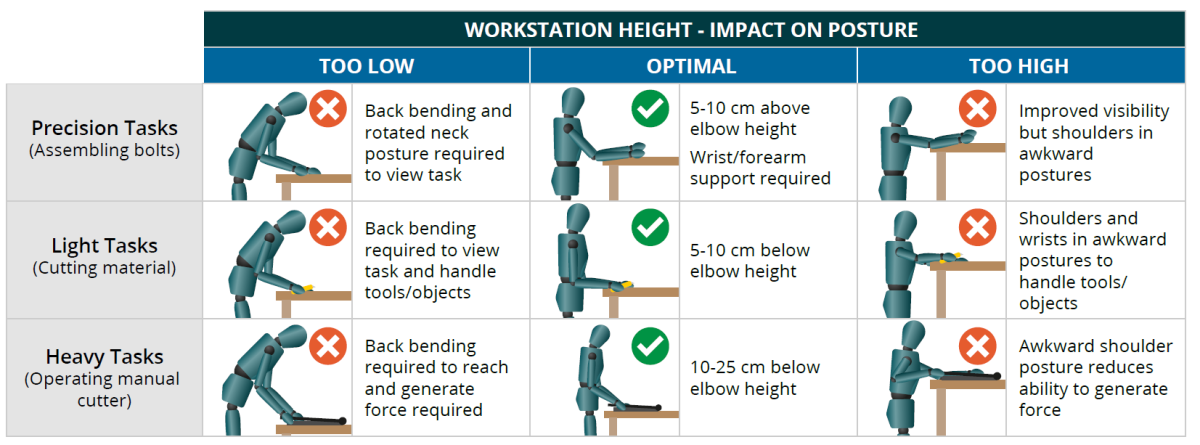
Standing desks are rising in popularity, but they require different dimensions than seated desks.
What Height Should a Standing Desk Be?
For a standing desk, measure from the floor to your elbow while standing straight. Subtract 1–2 inches to account for a slight arm bend while typing.
• Average standing desk height: 40–46 inches
• Best for users 5’8″–5’10”: ~42 inches
• Shorter users (under 5’6″): 36–40 inches
• Taller users (over 6′): 44–48 inches
Sit-Stand Desk Height Range
Adjustable sit-stand desks typically offer a range from 24 to 48 inches, covering both seated and standing needs. Look for models that save preset heights for quick switching between postures.
Matching Desk Height to Chair and Monitor

Even the perfect desk height won’t help if your chair or monitor is wrong. Ergonomics is a system—each part must work together.
Chair Height and Desk Alignment
Your chair should let you:
• Sit with thighs parallel to the floor
• Keep elbows level with the desk surface
• Maintain a 2–4 inch gap behind the knees
If you’re hunching or reaching up, adjust the chair or desk—not your posture.
Monitor Position for Neck and Eye Health
A correctly positioned monitor prevents neck strain:
• Top of screen at or slightly below eye level
• Screen 20–30 inches from eyes
• Directly in front of you, not angled
If your monitor is too low, use a stand. Too high? Lower the desk or adjust the mount.
Common Desk Height Mistakes to Avoid

Even with the right measurements, people make setup errors that undermine ergonomics.
Using a Dining Table as a Desk
Many repurpose dining tables (typically 30–31 inches tall) as workspaces. While close to standard, they often lack cable management, proper depth, or adjustability. More importantly, they may be too high for shorter users.
Fix: Add an adjustable keyboard tray or use a standing mat with anti-fatigue support if standing.
Ignoring Foot Position
If your feet don’t reach the floor at the right desk height, your legs lose support, increasing lower back pressure.
Solution: Use a footrest to keep feet flat and knees at 90 degrees.
Poor Keyboard and Wrist Angle
A desk that’s too high forces wrists to bend downward. Over time, this can contribute to carpal tunnel syndrome.
Fix: Use an ergonomic keyboard or negative tilt tray to keep wrists neutral.
Desk Types and Their Standard Heights
Not all desks are created equal. Height varies by type and function.
Executive Desks
Often larger and more decorative, executive desks usually sit at 30 inches. Some antique or custom models may be slightly taller or shorter.
L-Shaped and Corner Desks
These follow standard height (29–30 inches) but offer more surface area. Ensure both wings are level for consistent ergonomics.
Computer Desks
Designed for monitors and peripherals, these range from 28 to 30 inches. Some include CPU storage or wire management but rarely offer height adjustability.
Kids’ Desks
Smaller users need smaller desks. Children’s desks range from 18 to 23 inches, depending on age:
• Ages 3–5: 18–20 inches
• Ages 6–8: 20–22 inches
• Ages 9–12: 22–23 inches
How to Adjust Desk Height When Needed
Can’t find the right desk? Modify what you have.
Raising a Desk
If your desk is too low:
• Add furniture risers under each leg
• Use wooden blocks or custom feet
• Install longer legs (for DIY or modular desks)
Ensure stability—wobbling increases injury risk.
Lowering a Desk
Harder than raising, but possible:
• Replace legs with shorter ones
• Trim desk legs (only if material allows)
• Use a lower chair with foot support
Warning: Cutting legs may void warranties or damage structure.
Ergonomic Habits for Long-Term Comfort
The right height is just the start. Maintain comfort with these habits.
Take Microbreaks Every 30 Minutes
Every 30 minutes, stand, stretch, or walk for 1–2 minutes. This reduces muscle fatigue and improves circulation.
Use an Anti-Fatigue Mat When Standing
If using a standing desk, stand on a cushioned mat. It encourages subtle movement and reduces joint stress.
Optimize for Dual Monitors
Place screens side by side, with the center between them aligned to your face. Avoid twisting your neck repeatedly.
When to Invest in a Height-Adjustable Desk
If multiple people use the desk, or you switch between sitting and standing, an adjustable desk is worth the investment.
Benefits of Height-Adjustable Desks
• Custom fit for any user
• Promotes movement and better posture
• Reduces risk of repetitive strain
• Easy to switch between tasks
Look for models with:
• Smooth electric lift
• Memory height presets
• Weight capacity for your gear
• Stable frame (no wobble at full height)
Frequently Asked Questions About Office Desk Height
What is the standard height of an office desk?
The standard office desk height is 29 to 30 inches (71 to 76 cm). This fits most adults between 5’8″ and 5’10” when seated with proper posture.
How do I know if my desk is too high?
If your desk is too high, your shoulders will be raised, and your wrists will bend downward while typing. You may also feel tension in your neck or upper back.
Can I use a dining table as a desk?
Yes, but most dining tables are 30–31 inches tall, which may be too high for shorter users. Pair it with an adjustable chair and footrest for better ergonomics.
What desk height is best for someone 5’4″ or under?
For users 5’4″ and under, the ideal desk height is 24 to 26 inches. Consider a sit-stand desk or use a keyboard tray for better alignment.
How high should a standing desk be for a 6-foot person?
A 6-foot person should set their standing desk between 44 and 46 inches high. Measure from the floor to your elbow and subtract 1–2 inches for optimal typing position.
Do kids need different desk heights?
Yes. Kids’ desks range from 18 to 23 inches depending on age. A 3–5 year old needs an 18–20 inch desk, while a 9–12 year old needs 22–23 inches.
Key Takeaways for Finding Your Ideal Desk Height
So, how tall is an office desk? The standard answer is 29 to 30 inches, but the real answer is: as tall as your elbows when seated comfortably. Your body, not a factory spec, should dictate your desk height.
Whether you’re buying new or modifying an old desk, prioritize ergonomics over aesthetics. A few inches can make the difference between all-day comfort and chronic pain. Measure once, adjust as needed, and build a workspace that works for you—not just the average.