
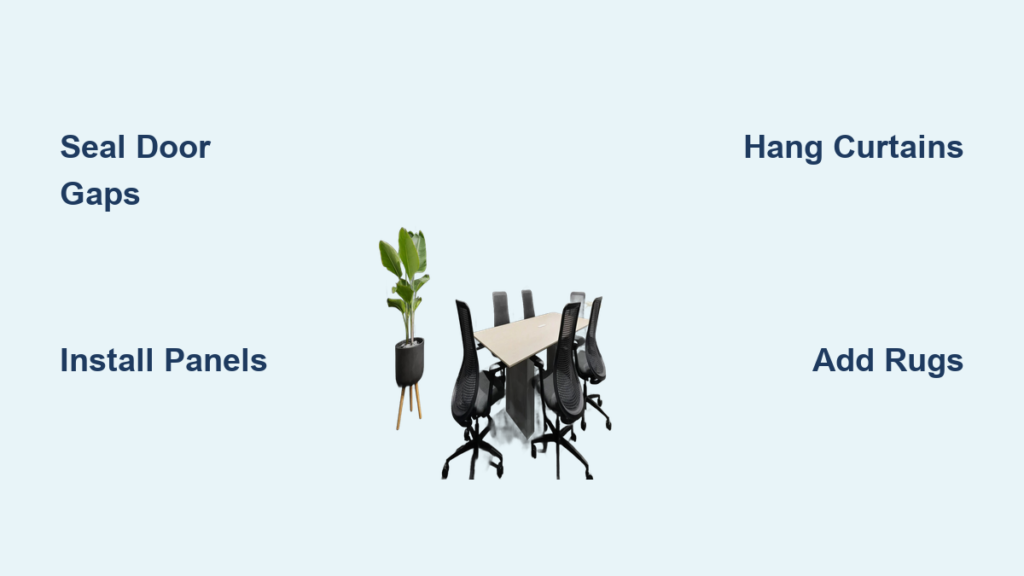
Is your office too noisy for focus, calls, or recording? The best way to soundproof an office combines sound absorption, blocking, and isolation to eliminate echo, reduce outside noise, and create a distraction-free workspace. Most untreated offices suffer from excessive reverberation—often with an RT60 (reverberation time) of 1.4 seconds or more—far above the ideal 0.3–0.7 seconds needed for clear speech and professional audio. Without treatment, sound bounces off hard walls, ceilings, and floors, making conversations muddy and focus difficult.
This guide reveals the most effective, real-world-tested methods to silence your office—from sealing doors and installing acoustic panels to optimizing layout and using smart decor. You’ll learn how to tackle both internal echo and external noise, avoid common mistakes, and integrate soundproofing seamlessly into your office’s design—whether you’re on a tight budget or building a full studio setup.
Diagnose Your Office’s Noise Problems First
Before spending a dime, identify what kind of noise you’re dealing with—this determines your strategy.
Match Your Treatment to Office Use
- Phone calls and meetings only? A few 1.5-inch acoustic panels may be enough.
- Zoom calls, podcasting, or video recording? Upgrade to 2.5-inch high-mid panels and treat more surfaces.
- Mixed use (all of the above)? Full treatment of walls, ceiling, and doors is best.
Clear the room and repaint walls—fresh paint reduces sound reflection. Use SketchUp or a simple sketch to plan panel and furniture placement. One real-world case showed that adding wall panels cut RT60 from 1.4 to under 0.6 seconds; adding ceiling panels brought it down to 0.4 seconds—ideal for professional work.
Find and Fix Sound Leaks
Walk around and check:
– Can you see light under the door? That’s a major sound leak.
– Are windows thin or single-pane? They likely let in traffic or street noise.
– Is the floor hard tile or wood? These reflect sound and increase echo.
Use the free 10log.com acoustic calculator to estimate your room’s RT60. Input dimensions, materials, and openings to see how much treatment you need.
Install Acoustic Panels on Critical Wall Surfaces
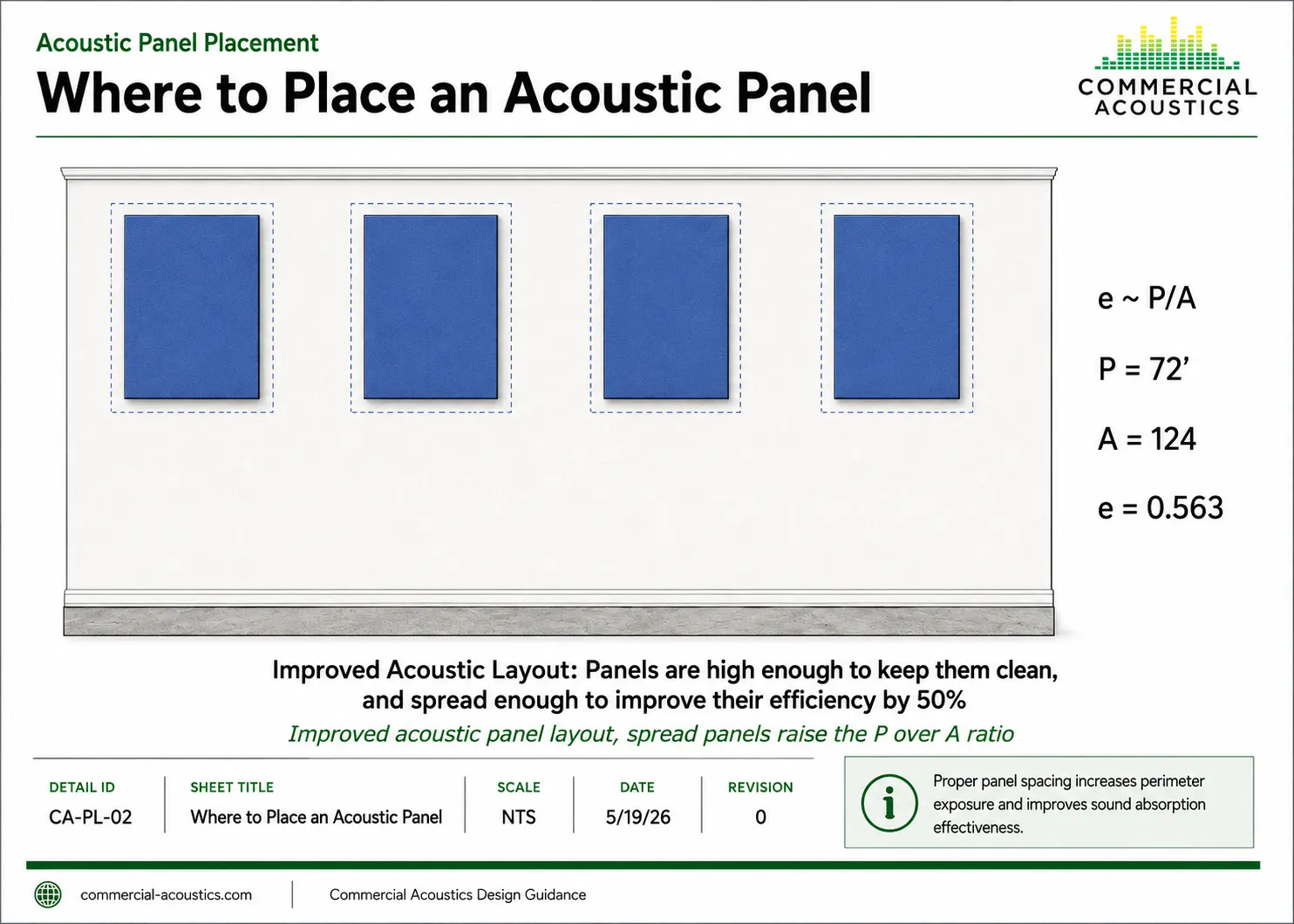
Acoustic panels are the fastest way to reduce echo and improve speech clarity.
Choose the Right Panel Material
- Fabric-wrapped fiberglass or mineral wool: Most effective, fire-safe, and durable
- Linen-wrapped acoustic foam: Good for mid-to-high frequencies, easy to install
- Recycled fabric panels: Eco-friendly and stylish
- Avoid cheap foam egg crates: These do little for real sound control
Select the Correct Panel Depth
- 1.5-inch panels: Great for reducing echo in basic office use
- 2.5-inch (high-mid) panels: Essential for recording, podcasting, or video calls
Position Panels for Maximum Impact
Back Wall Behind Desk
- Use 4×1 foot panels around light switches or outlets
- Keeps a clean look while reducing reflections during video calls
Large Side Walls
- Use 4×2 foot panels
- Center the first panel, then space others 1 foot apart
- Dark colors reduce glare and add visual depth
Walls with Windows
- Install one 4×2 panel on each side of the window
- Prevents sound from bouncing back to the speaker
- Keeps voice clear and focused
Mount Panels Securely
- Use cleats and screws for secure, adjustable mounting
- Adhesive strips work for lightweight panels
- Hang ceiling clouds with aircraft cables for open spaces
Custom panels with bold colors, patterns, or logos can double as office art—blending function with design.
Treat the Ceiling to Stop Overhead Echo
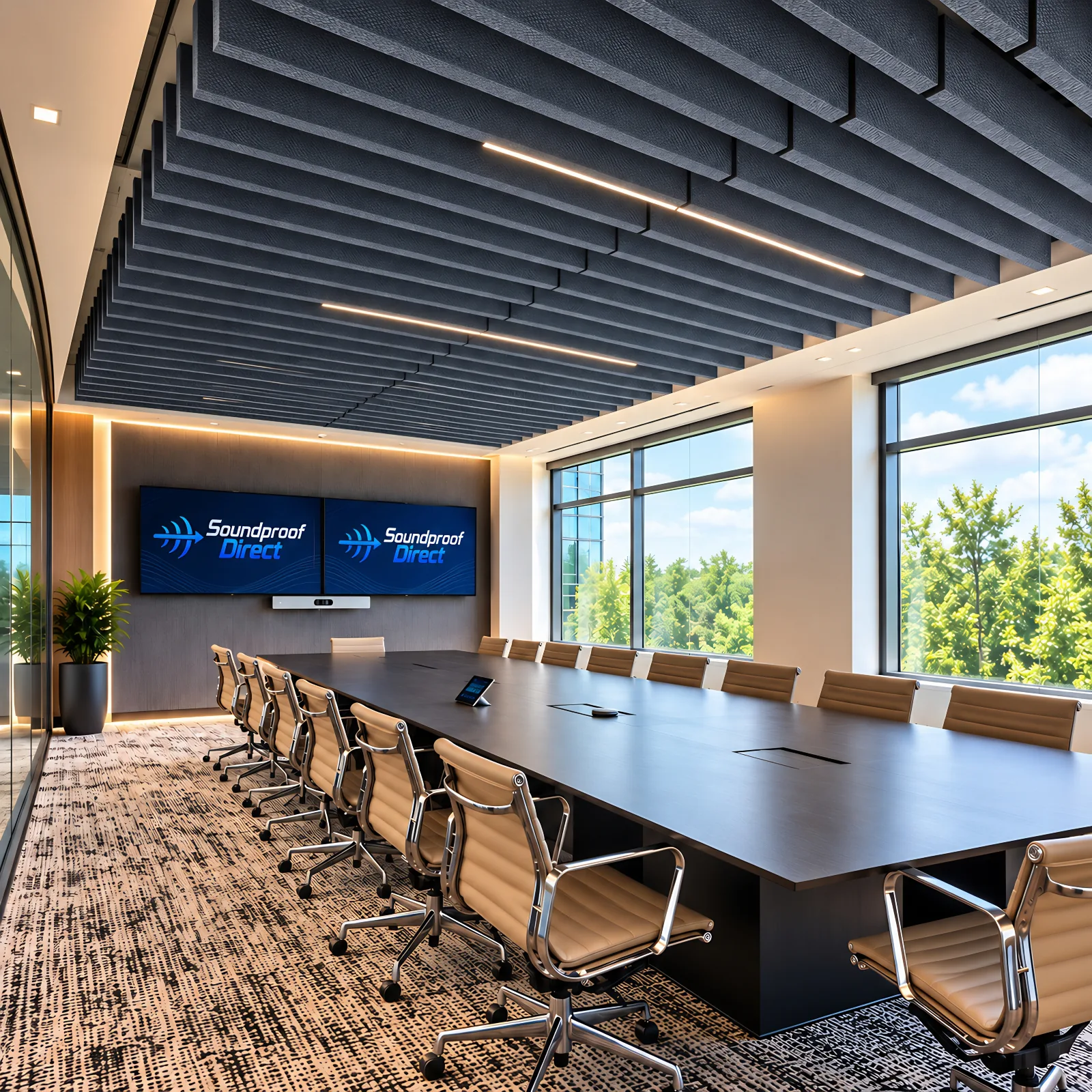
Ceilings reflect a massive amount of sound—especially in rooms with high or hard surfaces.
Hang Ceiling Clouds or Baffles
- Suspend rectangular or shaped panels 12–24 inches below the ceiling
- Ideal for rooms with high ceilings or open layouts
- Can be colored or shaped to match office branding
Install Flush-Mount Panels
- Place around light fixtures to reduce early reflections
- Critical for clean audio in recordings
- Use mineral fiber or fabric-wrapped panels
Upgrade to Acoustic Ceiling Tiles
- Replace standard tiles with sound-absorbing mineral fiber tiles
- Reduce noise between floors in multi-level offices
- Combine with resilient channels for even better isolation
In one case, adding ceiling panels dropped RT60 from 0.6 to 0.4 seconds—within the ideal range for professional use.
Seal and Upgrade the Office Door to Block Noise
Doors are the #1 source of sound leakage. Even a small gap can let in 50% more noise.
Replace Hollow-Core Doors
- Hollow-core doors block almost no sound (STC 15–20)
- Solid-core doors offer much better blocking (STC 30+)
- For maximum isolation, consider an exterior-rated door
Seal All Gaps Around the Door
Top and Sides
- Apply self-adhesive weather stripping
- Creates an airtight seal—stops sound and saves energy
- One user fixed their noise issue with weather stripping alone—no door replacement needed
Bottom of Door
- Use a door draft stopper (pillow-style, from Amazon)
- Or install a door sweep or automatic threshold seal
- Eliminates the biggest sound leak point
Add Full-Perimeter Sealing (Optional)
- Use a door seal kit with metal frame and rubber gasket
- Creates a full perimeter seal—like a recording studio door
- Best for high-noise environments or podcast rooms
Stylish trim, handles, or paint can make a solid door look like part of the office design.
Soundproof Windows to Block Outside Noise

Windows are weak points for traffic, neighbors, and environmental noise.
Seal or Cover the Window
Option 1: Window Plugs
- Add a removable second pane of glass
- Keeps visibility while reducing noise
- Great for older windows
Option 2: Plywood or MDF Cover
- Use sealed ¾-inch plywood or MDF board
- Apply weatherstripping around edges for airtight fit
- Blocks nearly all outside noise—but kills natural light
Hang Soundproof Curtains
- Heavy, layered curtains made of vinyl, foam, or mass-loaded vinyl (MLV)
- Drape from ceiling to floor for best effect
- Reduce outside noise by up to 50%
- Available in elegant fabrics like velvet or linen
Upgrade to Better Windows
- Double-pane windows: Higher STC rating, better noise blocking
- Triple-glazed windows: Even better, but expensive
- Acoustic windows: Laminated glass with insulated frames—best for extreme noise
Even if you can’t replace windows, sealing gaps and adding curtains makes a big difference.
Upgrade Flooring to Reduce Noise Transmission

Hard floors reflect sound and transmit footstep noise—especially in multi-story offices.
Add Carpet with Thick Underlay
- Carpet absorbs sound and reduces echo
- Use dense rubber or foam underlay for extra absorption
- Even over existing carpet, an extra pad helps
Use Rugs with Padding
- Place large area rugs in high-traffic zones
- Always use a rug pad—it adds sound insulation and prevents slipping
- Choose stylish patterns to enhance office decor
Consider Floating Floors (For Major Projects)
- Install over existing floor with resilient underlayment
- Decouples the floor, reducing sound transmission between levels
- Ideal for home offices above living spaces
Add Soft Materials
- Throw blankets, floor cushions, or upholstered benches
- All help absorb mid-to-high frequency noise
- Combine with rugs for layered sound control
Use Furniture and Decor to Absorb and Block Sound
Smart furniture choices can improve acoustics while enhancing style.
Stock Bookshelves as Sound Barriers
- Full bookshelves absorb and scatter sound
- Place along shared walls or behind desks
- Mix book sizes and colors for a curated, professional look
Choose Acoustic-Friendly Furniture
- Upholstered benches, fabric-covered storage, padded cabinets
- Soft materials absorb sound better than wood or metal
- Large cabinets can block sound between zones
Install Acoustic Room Dividers
- Freestanding, fabric-wrapped panels
- Create private workspaces in open offices
- High-end models reach STC 40+ for excellent isolation
- Glass partitions with acoustic laminates offer transparency and noise control
Add Plants in Stylish Planters
- Tall, leafy plants absorb sound and improve air quality
- Place in corners or near walls to reduce reflections
- Combine with planters made of soft materials for extra absorption
Try Acoustic Wallpaper
- Textured or layered wallpapers designed to dampen sound
- Helps reduce wall reflections
- Works well in low-budget or rental offices
Reduce HVAC and Equipment Noise
HVAC systems, fans, and office equipment can create constant background noise.
Install Duct Silencers
- Add acoustic attenuators to HVAC ducts
- Reduce airflow noise without blocking ventilation
Use Vibration Isolators
- Mount noisy equipment (printers, servers) on rubber pads or isolators
- Prevents vibration from traveling through walls or floors
Upgrade to Quiet Units
- Choose low-noise fans and blowers when replacing HVAC
- Look for equipment with sound ratings below 40 dB
Relocate Noisy Devices
- Move printers, servers, or routers to a separate closet or room
- Keeps quiet zones truly quiet
Design a Smart Office Layout for Better Acoustics
How you arrange your office affects sound more than you think.
Create Quiet and Noisy Zones
- Quiet zones: For focused work, calls, and recording—place away from doors and high-traffic areas
- Noisy zones: Meeting rooms, break areas, printers—keep separate
Use Furniture as Sound Barriers
- Position bookshelves, cabinets, or room dividers between noise sources and quiet areas
- Blocks direct sound paths
Optimize Panel and Desk Placement
- Avoid placing desks directly opposite hard walls
- Angle desks or add panels to break up sound reflections
- Keep ceiling clouds over seating or recording areas
Measure and Improve Your Soundproofing Results
Don’t guess—measure your progress.
Calculate RT60 with 10log.com
- Free online tool: input room size, materials, and openings
- Shows how many panels you need to reach 0.3–0.7 seconds RT60
- Track improvements after each upgrade
Understand STC Ratings
- STC (Sound Transmission Class) measures how well materials block sound
- Higher STC = better blocking
- Solid doors (STC 30+), acoustic partitions (STC 40+), and double-pane windows all improve isolation
Budget-Friendly Soundproofing Hacks That Work
You don’t need a studio budget to make a big difference.
Top Low-Cost Upgrades
- Weather stripping: $10, installs in minutes, stops sound leaks
- Door draft stopper: $15, slides under door, blocks threshold noise
- Rugs + rug pads: $50–$100, adds comfort and sound absorption
- Soundproof curtains: $60–$120, reduces outside noise and adds style
- Three 24×36” acoustic panels: ~$200, dramatically cuts echo
One user fixed their entire office with weather stripping and three panels—no major renovations.
When to Invest More
- Full wall/ceiling paneling
- Solid-core door + seal kit
- Floating floor or double-glazed windows
- Soundproof booth (for maximum privacy)
Blend Soundproofing with Office Aesthetics
Sound control doesn’t have to look industrial.
Make Panels Part of the Design
- Use custom colors, patterns, or company logos
- Frame panels like art or group in geometric layouts
Choose Stylish Soundproofing
- Velvet curtains, wooden-framed panels, designer rugs
- Acoustic clouds in brand colors
- Room dividers with modern finishes
Match Doors and Trim
- Paint solid doors to match walls
- Add decorative handles or trim
- Hide functionality with elegance
Try Specialized Solutions for Maximum Privacy
For extreme noise or privacy needs:
Use a Soundproof Booth

- Freestanding, fully insulated pods
- Ideal for calls, recording, or focus
- Modern designs with lighting, shelves, and ventilation
Play Noise-Masking Music
- Sonos 5 speaker with ambient music or white noise
- Drowns out background noise without headphones
- More comfortable than wearing noise-canceling headphones all day
Wear Noise-Canceling Headphones
- Good for personal use, but not ideal for long-term wear
- Combine with room treatment for best results
Frequently Asked Questions About Soundproofing an Office
What is the most effective way to reduce echo in an office?
Install 2.5-inch fabric-wrapped acoustic panels on large walls and behind your desk. Add ceiling clouds to reduce overhead reflections. This combination can bring RT60 from 1.4 seconds down to 0.4—ideal for clear speech and recordings.
How do I stop outside noise from entering my office?
Seal gaps around doors and windows with weather stripping and door sweeps. Hang soundproof curtains or install double-pane windows. For extreme noise, consider window plugs or acoustic-rated glass.
Can I soundproof an office without remodeling?
Yes. Use rugs with pads, bookshelves, acoustic panels, and soundproof curtains. Seal door gaps with weather stripping and draft stoppers. These non-invasive upgrades significantly improve acoustics in rentals or shared spaces.
Do acoustic panels really work for Zoom calls?
Yes. Acoustic panels reduce echo and reverberation, making your voice sound clearer and more professional. Place panels behind you and on side walls to eliminate background noise and improve audio quality.
What is the cheapest way to start soundproofing?
Start with door weather stripping ($10) and three 24×36” acoustic panels ($200). Add a door draft stopper ($15) and a large rug with pad ($80). This $300 setup tackles both internal echo and external noise effectively.
How do I measure if my office is quiet enough?
Use the free 10log.com calculator to estimate RT60. Aim for 0.3–0.7 seconds. Lower RT60 means less echo and clearer speech—perfect for calls, recordings, and focus.
Key Takeaways for Soundproofing Your Office
The best way to soundproof an office is a three-part strategy:
- Absorb internal echo with panels, rugs, and soft furniture
- Block outside noise with sealed doors, windows, and curtains
- Isolate sound with decoupled floors, resilient channels, or booths
Quick Action Plan:
- Start with door sealing and 2–3 acoustic panels
- Add ceiling clouds and rugs for bigger impact
- Use 10log.com to track RT60 and optimize
- Upgrade to solid doors and double-pane windows if noise persists
A well-soundproofed office boosts focus, reduces stress, and makes every call sound professional. Whether you spend $50 or $5,000, every step forward improves your work environment. Start small, measure results, and build toward silence.



