You flip on the light, but your office still feels like a dim cave. A dark workspace doesn’t just look uninviting—it can drain your focus, lower your energy, and make work feel like a slog. The good news? You don’t need a renovation or a new office to fix it. With smart lighting, strategic color choices, and clever design hacks, you can brighten up a dark office and transform it into a vibrant, productive environment—no windows required.
This guide gives you a step-by-step plan to maximize light and energy in even the dullest office. You’ll learn how to choose the right paint, layer lighting like a pro, use mirrors to bounce light, and select furniture and decor that amplify brightness. Whether your office is windowless or just poorly lit, these proven strategies will make a visible difference—starting today.
Paint Walls in Light, Reflective Colors

Choose White, Soft White, or Light Gray Paint
Start with your largest surface: the walls. Dark or warm-toned paints like deep beige absorb light and make a room feel boxed in. Switch to white, soft white, warm gray, or light gray to instantly reflect more light and open up the space. These shades bounce both natural and artificial light, making the room feel significantly brighter—even if the lighting hasn’t changed.
Test paint samples on multiple walls and observe them at different times of day. A color that looks crisp in the morning might appear dull under artificial light. For a clean, energizing feel, go for cool whites (5500K–6500K undertones). For a softer, welcoming vibe, choose warm whites (3000K–4000K).
Add One Bold Accent Wall
Too much white can feel sterile. Break the monotony with one accent wall in a bold but balanced color like teal, sage green, or deep navy. Place it behind your desk or in a focal area to draw the eye and add depth. This creates visual interest without sacrificing brightness.
Never use dark colors on more than one wall. The goal is to enhance light—use bold tones as accents, not the main event.
Use Light-Colored Trim and Baseboards
Don’t ignore trim, doors, and baseboards. Painting them white or off-white creates a seamless, airy look that enhances brightness. Pair with light wood finishes on doors or cabinets to maintain a cohesive, open feel.
Layer Your Lighting for Maximum Impact

Combine Ambient, Task, and Accent Lighting
Relying only on overhead lights creates flat, harsh illumination. Instead, use a three-tier lighting strategy:
- Ambient lighting: General, soft light (e.g., ceiling panels or wall sconces)
- Task lighting: Focused light for work (e.g., adjustable desk lamps)
- Accent lighting: Highlights shelves, art, or architectural details
This layered approach reduces shadows, prevents eye strain, and makes the space feel dynamic and spacious.
Install Daylight-Color Bulbs (5000K–6500K)
Replace warm yellow bulbs with cool-white or daylight bulbs (5000K–6500K). These mimic natural sunlight and boost alertness—perfect for work. Use them in overhead fixtures and task lamps. For evening use or relaxation, switch to warmer tones (2700K–3000K) to support healthy sleep cycles.
Upgrade to Smart LED Ceiling Panels
Install LED ceiling panels with adjustable color temperature. These provide even, glare-free light and can be tuned for different activities. Need focus? Switch to cool white. Winding down? Shift to warm. Some models integrate with smart systems for automated scheduling based on sunrise and sunset.
Maximize Every Ray of Natural Light
Replace Heavy Curtains with Sheer Treatments
Thick blinds or dark curtains block precious daylight. Swap them for sheer or light-filtering curtains that diffuse sunlight while maintaining privacy. Keep them pulled back during the day to let in every possible ray.
If you have no windows, skip to reflective strategies—but if you have even a small one, treat it like a light source goldmine.
Position Your Desk Near or Perpendicular to Windows
Place your desk close to the window, ideally facing it or sitting to the side. This ensures your workspace gets direct daylight, reducing reliance on artificial light and boosting mood and productivity.
Avoid placing the desk directly in front of a window if it causes screen glare. In that case, position it to the side and let natural light supplement your task lighting.
Use Mirrors to Reflect and Amplify Light
Place a large mirror opposite the window to bounce light deeper into the room. Mirrors don’t create light, but they amplify it—making dark corners feel brighter and the space appear larger.
For best results, use a floor-length or wall-mounted mirror with a simple frame. In a multi-use office-gym space, this also doubles as a workout mirror.
Choose Light, Airy Furniture
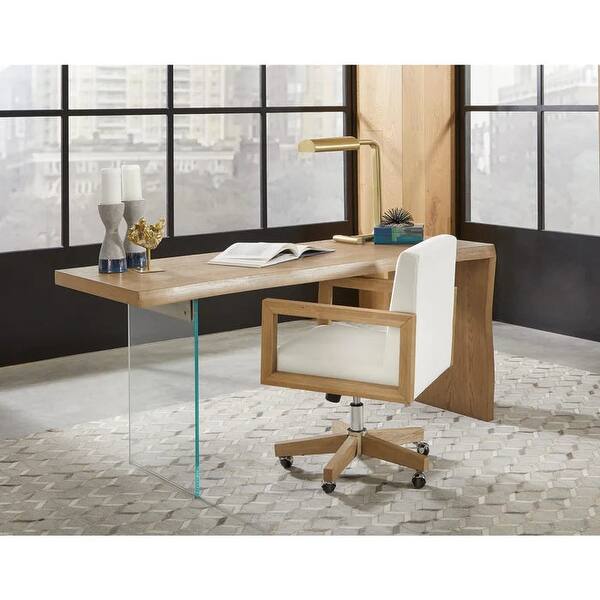
Opt for White, Light Oak, or Glass-Top Desks
Dark furniture absorbs light and makes a room feel cramped. Choose white, light oak, or pastel-colored desks and chairs. These reflect light and contribute to an open, modern look.
A glass-top desk is another excellent option—it adds transparency and brightness while maintaining functionality.
Avoid Heavy, Dark Wood Furniture
Steer clear of bulky, dark wood pieces. If replacing isn’t an option, consider painting them in light colors or using slipcovers. Even a white desk pad or light-colored mouse mat can help reflect light upward.
Install Floating Shelves in Light Finishes
Use floating shelves in white or light wood to store books, decor, or supplies. They provide storage without blocking light or making the room feel cluttered. Keep them organized to maintain a clean, open vibe.
Use Reflective Surfaces to Multiply Light

Place Mirrors Strategically Beyond the Window Wall
In addition to window-facing mirrors, use smaller mirrors or mirrored decor on side walls to catch and redirect light from multiple angles. A mirrored cabinet or framed mirror on a side wall can brighten an interior office or hallway-facing room.
In gym zones, full-wall mirrors enhance both light and space perception while helping with form checks.
Incorporate Glass, Chrome, and Metallic Finishes
Add glass tabletops, metallic lamps, or chrome fixtures. These materials catch and scatter light, creating subtle sparkle and movement. A silver-framed art piece or stainless steel floor lamp can act as a mini light reflector.
Avoid matte black or dark finishes on lighting fixtures—they absorb light instead of enhancing it.
Combine Multiple Reflective Elements
Use a multi-surface strategy: mirror + glass desk + metallic lamp + light walls. Together, these elements create a cumulative brightening effect that no single item can achieve alone.
Add Bright Accents Without Sacrificing Light
Use Pops of Color in Accessories
A bright office doesn’t mean all-white. Inject energy with accent colors like coral, mustard yellow, or teal through cushions, rugs, or artwork. These vibrant touches lift the mood without sacrificing brightness.
Follow the 80/20 rule: 80% light neutrals, 20% bold color. This keeps the space feeling open while adding personality.
Hang Uplifting, Light-Framed Wall Art
Choose abstract or nature-inspired prints in bright, cheerful palettes. Large-scale art draws the eye upward and adds visual interest. Frame in white, silver, or light wood to maintain brightness.
Avoid dark, heavy frames—they create visual weight and absorb light.
Use Light-Enhancing Rugs
Pick area rugs with light base colors and subtle patterns. Avoid dark, busy designs that make the floor feel heavy. A small, light gray or cream rug under your desk can anchor the space without dimming it.
For multi-use rooms, use modular mats or contrasting rugs to define zones—like a black rubber mat for gym equipment on a light floor.
Bring in Plants to Add Life and Light

Choose Low-Light, Air-Purifying Plants
Plants add life, improve air quality, and subtly enhance brightness with natural green tones. Great options for dark offices:
- Snake plant: Tall, architectural, thrives in low light
- Pothos: Trailing vine, grows well in shade
- Fiddle leaf fig: Statement plant, needs indirect light
- Succulents: Small, desk-friendly, require minimal care
Place Plants to Fill Dark Corners
Put tall plants in corners to fill dark voids. Use small succulents or trailing pothos on shelves or desks. A plant near a window or under a light source becomes a living reflector of green vitality.
Avoid overcrowding—too many plants can feel cluttered. One or two well-placed specimens make the biggest impact.
Declutter to Reflect More Light
Clear Surfaces to Maximize Light Reflection
Clutter blocks light and creates visual chaos. A clean desk reflects more light and feels calmer. Remove unnecessary items: old papers, unused gadgets, random knickknacks.
Keep only essentials on your desk: monitor, keyboard, notebook, and a plant.
Use Smart, Space-Saving Storage
Store supplies in closed cabinets, floating shelves, or wall-mounted organizers. Keep the floor clear—this opens up sightlines and makes the room feel larger.
For gym equipment, use wall-mounted racks for weights, resistance bands, and yoga mats. Tuck them away when not in use.
Maintain a Daily Tidy Routine
Schedule a 5-minute daily clear-off of your desk. Weekly, go through drawers and shelves. An organized space isn’t just brighter—it’s more productive.
Define Zones in Multi-Purpose Rooms
Separate Office and Gym Areas Visually
If your office doubles as a gym, create distinct zones to prevent visual clutter and maintain brightness. Use:
- Rugs or mats to mark workout areas
- Furniture placement to separate functions
- Lighting presets for different activities
Keep the office zone light and focused; the gym zone functional and ventilated.
Use Flexible, Dual-Purpose Furniture
Choose dual-purpose pieces: a bench that stores weights, a foldable desk, or a mobile cart for supplies. This keeps the space adaptable without sacrificing brightness.
Transition Smoothly Between Activities
When switching from work to workout, store office items out of sight. Use cabinets or rolling carts. This mental and visual shift helps maintain focus and keeps the space feeling intentional.
Use Smart Tech to Enhance Brightness
Program Lighting for Different Activities
Smart bulbs or panels let you set lighting scenes for different tasks:
- Work mode: Cool white, high brightness
- Gym mode: Bright, even light
- Relax mode: Warm, dimmed glow
Schedule changes to match sunrise and sunset for natural rhythm support.
Visualize Changes with AI Design Tools
Before buying paint or furniture, simulate your design using AI tools:
- RoomGPT: Upload a photo to test lighting and layout
- MidJourney or DALL·E: Generate redesign mockups
- Canva: Build mood boards with color palettes and decor ideas
These tools help you see the impact of changes before committing.
Implement Changes in a Smart, Phased Way
Start with Lighting and Paint
Phase 1: Test paint samples and upgrade bulbs. These are low-cost, high-impact changes.
Phase 2: Add mirrors, replace dark furniture, and install task lighting.
Phase 3: Introduce plants, decor, and smart tech.
Tackle one area at a time to avoid overwhelm.
Test Before You Commit
Try temporary solutions first:
- Tape up white fabric to simulate light walls
- Use a floor mirror to test reflection
- Borrow a daylight lamp to test bulb color
See what works before investing.
Prioritize Your Purchases
Focus on lighting first, then paint and finishes, then furniture and decor. Brightness starts with light—everything else supports it.
Key Takeaways for Brightening Your Dark Office
You don’t need a window or a full remodel to brighten up a dark office. Start with layered lighting—combine ambient, task, and accent lights with daylight-color bulbs. Paint walls in light tones like white or soft gray, and use mirrors to bounce light across the room. Choose light-colored, reflective furniture and keep surfaces clutter-free to maximize light reflection.
Even small changes—like swapping a bulb, adding a mirror, or clearing your desk—can make a big difference. Work with light, not against it, and your office will feel more energized, focused, and inviting. When your space supports you, your productivity follows.
Frequently Asked Questions About Brightening a Dark Office
How can I brighten a windowless office?
Use layered lighting with cool-white or daylight bulbs (5000K–6500K), paint walls white or light gray, and add mirrors and glass surfaces to reflect artificial light. Incorporate light-colored furniture and keep the space decluttered to maximize brightness.
What color paint makes a dark room brighter?
White, soft white, light gray, and warm gray are the best choices. These colors reflect light instead of absorbing it, making the room feel more open and airy. Avoid dark or warm-toned paints like deep beige or brown.
Do mirrors really help brighten a room?
Yes. Mirrors reflect and amplify existing light, making dark corners feel brighter and the room appear larger. Place a large mirror opposite a window or light source for the best effect.
Can plants help brighten a dark office?
Indirectly, yes. While plants don’t emit light, green foliage adds visual freshness and life, making the space feel more vibrant. Choose low-light varieties like snake plants or pothos to thrive in dim conditions.
What type of lighting is best for a dark office?
Use a three-tier system: ambient (ceiling panels), task (desk lamps), and accent (shelf lights). Use daylight-color bulbs (5000K–6500K) for focus. Upgrade to smart LED panels with adjustable color temperature for full control.
How do I make a small, dark office feel bigger?
Use light wall colors, mirrors, and glass furniture to reflect light. Keep the floor clear with floating shelves and wall-mounted storage. Define zones with rugs and lighting to create visual separation without walls.