Every day, over 150 million addresses receive mail thanks to the U.S. Postal Service (USPS)—a massive, automated network that processes hundreds of millions of letters, flats, and packages. But how does the post office work behind the scenes? From the moment you drop a letter in a blue mailbox to a package arriving at your door, every item travels through a high-speed, data-driven system powered by robotics, optical scanning, and precise sequencing. This is not just a mail carrier—it’s one of the most complex logistics operations in the world.
In this guide, you’ll discover how the post office works step by step: how machines read handwritten addresses, why magazines are sorted by robotic arms, and what really determines your delivery time. You’ll also learn how to interpret tracking updates, avoid common delivery myths, and understand the technology that keeps the system running—even during peak seasons. Whether you’re a customer, online seller, or just curious, here’s the full picture of how the U.S. mail system delivers.
Mail Categories: Letters, Flats, and Packages

The U.S. Postal Service sorts all incoming mail into three distinct categories. Each type follows a different automated path based on size, shape, and delivery requirements.
Letters: Standard Envelopes and Postcards
Letters include personal mail, bills, greeting cards, and postcards. To qualify for automated processing, they must be:
– Under 6 inches high
– Under 11.5 inches long
– Less than 1/4 inch thick
Items that meet these standards move through high-speed sorting systems. Those that don’t—like lumpy envelopes or damaged mail—are set aside for manual handling.
Flats: Magazines, Catalogs, and Large Envelopes
Flats are larger than letters but not bulky enough to be packages. This category includes:
• Magazines
• Phone books
• Large manila envelopes
• Retail catalogs
Because of their size, flats require specialized machinery and are processed on separate lines from letters.
Packages: Boxes, Padded Mailers, and Oversized Items
Packages vary widely in weight and dimensions, from small bubble mailers to 70-pound boxes. The Automated Package Processing System handles this diversity using scanning tunnels, robotic sorters, and real-time tracking. Unlike letters, most packages are scanned at multiple points, allowing for detailed delivery updates.
Letter Sorting: From Mailbox to Your Doorstep
Letters move through a rapid, automated journey designed for speed and accuracy. The system ensures each envelope reaches the right carrier in the correct delivery order.
Culling: Removing Non-Machine-Readable Mail
Before sorting begins, machines perform culling—filtering out letters that don’t meet size, shape, or thickness standards. Odd-shaped envelopes, wrinkled mail, or items with smudged addresses are removed and processed manually. This step ensures only uniform mail enters the high-speed system.
AFCS: Reading Addresses and Canceling Stamps
The Advanced Facer Canceler System (AFCS) is the core of letter processing. As letters race through the machine:
1. High-speed cameras capture an image of each envelope
2. Optical Character Recognition (OCR) reads handwritten or printed addresses
3. The system locates the stamp and applies a postmark to cancel it
4. Each letter is rotated to face the correct direction
5. A unique ID tag is assigned for tracking
This entire process takes seconds, with thousands of letters processed per hour.
Delivery Barcode Sorter: Final Route Sequencing
After AFCS, letters go to the Delivery Barcode Sorter. Workers feed them into the machine, which uses barcode data to sort mail into delivery point sequence—the exact order carriers deliver along their routes. This eliminates manual sorting and saves carriers hours each day.
Flats Processing: How Magazines Are Sorted
Flats are bulkier and more complex to handle than letters. Their journey involves large-scale automation and robotic precision.
Weighing and Verification Before Processing
Before entering the system, flats are weighed and verified to ensure they meet USPS size and postage requirements. Approved items move to the preparation area, where they’re organized for feeding into the Flats Sequencing System.
Flats Sequencing System: Football-Field-Sized Automation
The Flats Sequencing System (FSS) is a machine as long as a football field. It works like this:
1. Flats are fed one by one from bins
2. A camera scans the address
3. Software matches it to the correct delivery route
4. Robotic arms sort each flat into precise delivery order
5. Sorted flats are placed into trays
6. Trays are automatically loaded onto carts and moved to the loading dock
Carriers receive pre-ordered stacks, so no manual sorting is needed.
Package Handling: How Every Box Is Tracked and Sorted
Packages face the biggest challenge due to their variety in size and shape. The Automated Package Processing System handles this using advanced imaging and robotics.
Scanning and Imaging Tunnel: Real-Time Data Capture
Packages travel along belts into a scanning and imaging tunnel, where:
• Cameras read the destination address
• Sensors measure dimensions and weight
• Postage is verified
• Tracking information is updated in real time
Every package gets a digital footprint from the moment it enters the system.
Robotic Kicker: High-Speed Sorting
Once scanned, a robotic kicker launches each package into its designated bin based on destination. These bins feed directly into transport systems. Packages are then grouped with other mail going to the same local post office and loaded onto trucks.
Integrated Loading with Letters and Flats
At the loading dock, packages are combined with letters and flats bound for the same destination. This ensures all mail for a route arrives together, streamlining final delivery.
Final Delivery: Carriers Follow Pre-Sorted Routes

The last mile of delivery relies on pre-sorted mail and optimized route planning.
Morning Load-Up at Local Post Offices
Each morning, delivery vehicles arrive at local post offices with pre-sorted mail. Carriers:
• Pick up their assigned route load
• Receive letters, flats, and packages already in delivery point sequence
• Load their vehicles in the order of delivery stops
No manual sorting is required—everything is ready to go.
Following the Delivery Point Sequence
Carriers follow the exact sequence determined by the sorting machines. This optimized route:
• Reduces delivery time
• Minimizes backtracking
• Increases efficiency
Whether in a city or rural area, every route is designed for maximum effectiveness.
Debunking Common Postal Myths
Many people misunderstand how the post office works. Let’s clear up the most frequent misconceptions.
“My Package Should Arrive the Same Day”
Myth: Standard shipping delivers packages the same day.
Reality: Unless you use Priority Mail Express, same-day delivery is not offered. Standard shipping typically takes 3–5 business days, depending on distance.
“Mail Comes at the Same Time Every Day”
Myth: Mail arrives at 10:00 AM sharp.
Reality: Delivery times vary daily. Carriers start routes at different times, and weather, volume, or staffing can delay arrival.
“Tracking Means It’s Already Here”
Myth: If tracking says “out for delivery,” the package is at my door.
Reality: It means the package is loaded on the truck—but delivery could take hours. Rural routes often finish later in the day.
“The Post Office Is a Private Company”
Myth: USPS is like FedEx or UPS.
Reality: The U.S. Postal Service is a federal government agency, not a private business. It operates independently but is accountable to Congress.
Delivery Timeframes by Service Type
Service type determines how fast your mail arrives. Here’s what to expect.
First-Class Mail: Standard Letters and Small Packages
• For items under 13 ounces
• Delivery: 1–5 business days
• Includes bills, postcards, and personal mail
Priority Mail: Faster Delivery with Tracking
• For packages up to 70 pounds
• Delivery: 1–3 business days
• Includes tracking and insurance options
Standard Shipping: 3–5 Business Days
• Commonly used by online sellers
• Not same-day or next-day
• Time varies by distance and volume
Factors That Delay Delivery
Even with automation, delays happen. Common causes include:
• Weather conditions (snow, floods)
• High mail volume (holidays, sales)
• Staffing shortages
• Rural routes (longer distances, fewer stops)
• Weekends and holidays (no delivery for most services)
Tracking: What It Can and Can’t Do
Tracking provides visibility—but has important limitations.
What Tracking Shows
• Scan history at processing centers
• Current location (e.g., “departed facility”)
• Delivery confirmation with timestamp
What Tracking Doesn’t Do
• No name/address lookup: You need the tracking number
• No real-time GPS: Updates happen only at scan points
• Not instant: There can be delays between movement and scanning
Always share the tracking number with customers for accurate updates.
Customer Service Options: Hold, Pick Up, or Deliver
USPS offers options for people who aren’t home during delivery.
PO Box: Mail Held at the Post Office
• Rent a locked box at your local post office
• Mail and packages are delivered there
• You pick them up during business hours
Ideal for renters, remote workers, or those concerned about porch piracy.
Hold-for-Pickup: Temporarily Hold Your Package
• Request that a package be held at the post office
• Available at most locations
• Usually held for 15 days before return
Useful when traveling or expecting a large delivery.
What Happens If No One’s Home?
Without special instructions:
• Small packages may be left at the door
• Larger or signature-required items are returned to sender
• Carriers do not “wait” or “come back later”
Behind the Scenes: Key USPS Technology
The post office runs on advanced systems most people never see.
Optical Character Recognition (OCR)
OCR reads handwritten addresses with over 90% accuracy. When it can’t read an address, the image is sent to a remote team for manual input.
National Address Database
Every U.S. address is stored in a central database. The system uses this to:
• Correct misspelled cities
• Verify ZIP codes
• Match addresses to delivery routes
Robotic Arms and Kickers
• Robotic arms sort flats into delivery order
• Robotic kickers launch packages into bins
• These systems reduce human error and increase speed
Reseller Tips: Explaining USPS to Customers
If you sell online, managing expectations is key.
Common Customer Questions
• “Why hasn’t my package arrived after 24 hours?”
• “Can you hold it if I’m not home?”
• “Where is it right now?”
How to Respond Clearly
• Explain standard timeframes: “Standard shipping is 3–5 business days.”
• Clarify tracking: “‘Out for delivery’ means it’s on the truck, not at your door.”
• Offer solutions: “Next time, choose Priority Mail for faster delivery.”
• Share USPS resources: Link to USPS.com for delivery estimates.
Build Trust Through Education
These conversations are opportunities. When you explain how the post office works, you:
• Reduce frustration
• Prevent disputes
• Build long-term customer loyalty
The Full Mail Journey: Step by Step
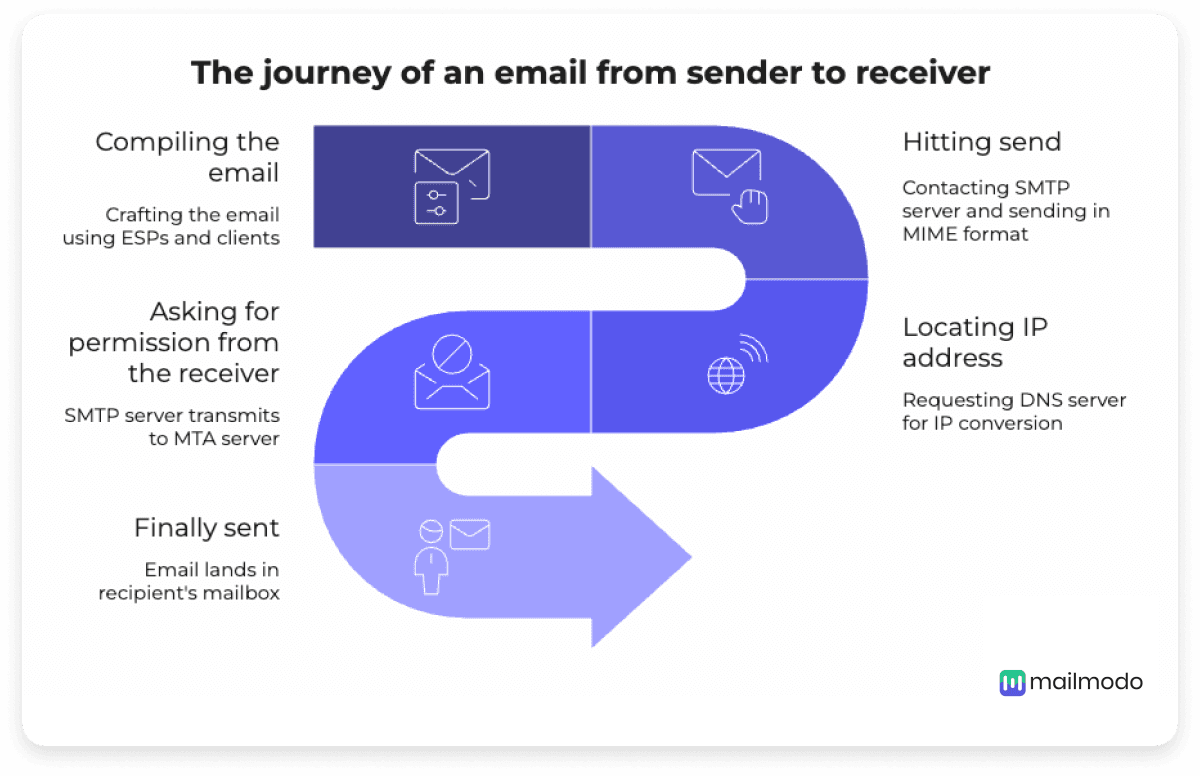
Here’s how a piece of mail travels from sender to recipient.
Letter Journey
- Drop-off: In mailbox or post office
- Culling: Filtered for automation
- AFCS: Address read, stamp canceled, faced
- Barcode Sorter: Sorted into delivery sequence
- Transport: To local post office
- Carrier Load: Picked up in route order
- Delivery: Along the carrier’s path
Package Journey
- Entry: Dropped off or picked up
- Scanning Tunnel: Address, weight, tracking captured
- Sorting: Robotic kicker directs to bin
- Loading: With other mail to same destination
- Trucking: To destination post office
- Carrier Assignment: Added to delivery route
- Final Delivery: Left at door or held for pickup
Key Takeaways for How the Post Office Works
The U.S. Postal Service is a highly automated, data-driven network that moves hundreds of millions of items daily with remarkable precision. From AI-powered cameras reading handwritten addresses to robotic arms sorting magazines, the system is engineered for efficiency and scale. Understanding how the post office works helps set realistic expectations—especially for delivery times, tracking, and service options.
While delays can happen due to weather, volume, or distance, the USPS remains one of the most reliable and extensive postal networks in the world. Whether you’re sending a birthday card or shipping a product, your mail is on a carefully engineered journey across a massive logistics system.
Next time you drop a letter or ship a package, remember: it’s not just “in the mail.” It’s on a high-tech, nationwide trip designed to get it to the right address—on time and in order.
Frequently Asked Questions About How the Post Office Works
How does the post office sort mail so quickly?
The USPS uses automated systems like the Advanced Facer Canceler System and robotic sorters. Machines scan addresses, cancel stamps, and sort mail into delivery order using optical recognition and barcode data—all at high speed.
Can the post office read handwritten addresses?
Yes. Optical Character Recognition (OCR) reads most handwritten addresses with over 90% accuracy. If the system can’t read it, a remote team manually inputs the address.
Why does my package take 3–5 days to arrive?
Standard shipping is not same-day. Delivery time depends on service type, distance, and mail volume. Priority Mail is faster, while First-Class and standard shipping take longer.
How does the post office deliver mail in the correct order?
Sorting machines arrange letters and flats into delivery point sequence—the exact order carriers deliver. This eliminates manual sorting and improves efficiency.
What happens if no one is home to receive a package?
Small, non-signature packages may be left at the door. Larger items or those requiring a signature are returned to the sender unless held at a post office.
Is the U.S. Postal Service a government agency?
Yes. The USPS is an independent federal agency, not a private company like FedEx or UPS. It is self-funded but accountable to Congress.