
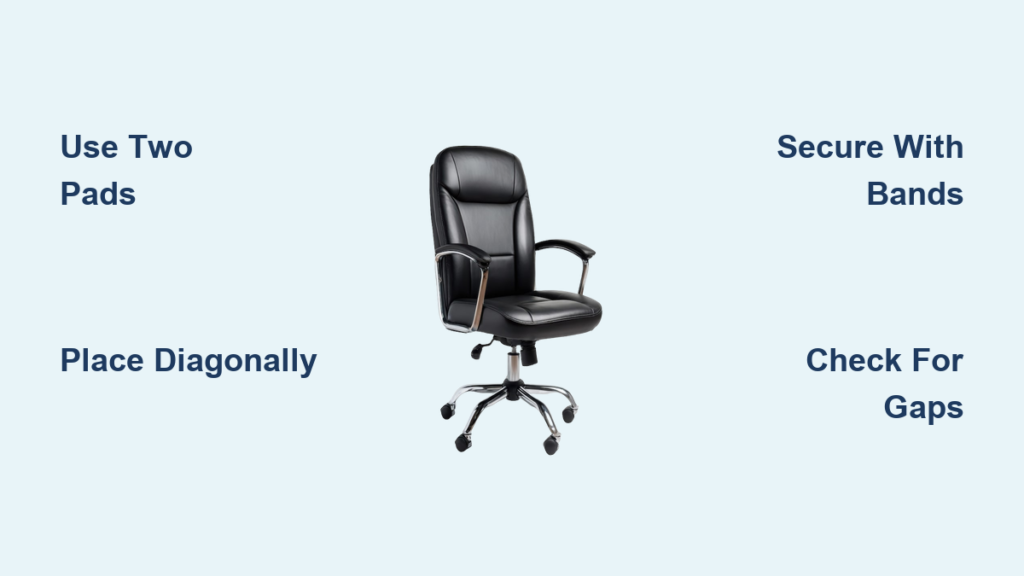
Moving an office chair might seem simple, but improper handling can lead to damaged casters, scratched upholstery, or bent frames. Unlike standard chairs, office chairs have adjustable mechanisms, swivel bases, and rolling wheels that make them more vulnerable during transport. Knowing how to transport an office chair properly ensures it arrives in perfect condition—ready to use without repairs or replacements. This guide reveals the proven dual-pad method, correct positioning techniques, and critical mistakes to avoid. Whether you’re relocating an office, moving to a dorm, or shipping a chair long-distance, these steps will protect your investment and save time and money.
You’ll learn exactly how to wrap and secure your chair using two moving pads and rubber bands, why diagonal placement is essential for full coverage, and how to adapt the process for dorm moves, office relocations, and shipping. With this approach, you’ll prevent common damage points like broken wheels, dented bases, and torn fabric—ensuring your chair stays functional and comfortable no matter the distance.
Prepare Your Workspace and Materials
Before lifting the chair, gather the right supplies and set up a clean area. A cluttered or dirty workspace increases the risk of scratches and contamination.
Gather Essential Moving Supplies
You’ll need just two key items:
• Two moving pads (also called furniture pads or blankets) with a soft, cushioned side
• Two strong rubber bands (not elastic or stretchy cords that can snap)
Using only one pad is a common mistake—office chairs are too large and complex for single-layer protection. The dual-pad system fully wraps the chair from base to backrest.
Set Up a Clean, Dry Area
Place the first moving pad on a flat, clean, and dry surface. Avoid concrete floors with debris or moisture. Never step on the pad after laying it down—your shoes can transfer grit that may scratch the chair’s finish during wrapping.
Position Chair Diagonally for Full Coverage

The way you place the chair on the pad makes all the difference in protection. Standard straight alignment leaves legs exposed. The diagonal method maximizes coverage.
Center Chair at a Caddy-Cornered Angle
Lay the first moving pad flat on the floor with the soft, light-colored side facing up. This side provides cushioning and prevents scuffs.
Lift the office chair and place it diagonally across the pad—like a diamond shape. This positioning allows the corners of the pad to extend further around the bulky base and legs.
Why this works: Office chair legs are wider and thicker than dining chairs. A straight placement doesn’t give enough fabric to wrap around the base. The diagonal angle uses the pad’s full dimensions efficiently.
Adjust the chair slightly if needed to ensure even overhang on all sides—especially at the wheel ends.
Wrap with Second Pad for Complete Protection
One pad protects the bottom. The second pad shields the top and sides, creating a full protective cocoon.
Cover Chair Top with Second Pad
Take the second moving pad and drape it over the chair from the top. Make sure the soft side faces outward—this maintains maximum cushioning against impacts.
Pull the pad down so it covers:
• The entire backrest
• The seat
• The sides of the frame
This top pad prevents scratches on upholstery and protects adjustable levers and armrests during stacking or loading.
Dual-Pad Protection Breakdown
| Pad Position | Protects | Why It Matters |
|---|---|---|
| Bottom pad | Base, legs, casters | Prevents floor contact and wheel damage |
| Top pad | Backrest, seat, arms | Shields fabric and mechanisms from dents |
Without both pads, critical components are left exposed to scrapes, dings, and dirt.
Secure Pads with Rubber Bands

Loose pads shift during transport, leaving parts unprotected. Rubber bands hold everything in place without damaging the chair.
Apply Bands at Key Levels
Wrap one rubber band:
• Around the seat level – just below the backrest
And a second band:
• Higher, around the upper backrest
These anchor points prevent the pads from slipping off when the chair is lifted or tilted.
Caution: Do not over-tighten. Rubber bands should be snug but not compress the padding or pinch the fabric. Excessive pressure can leave marks or distort foam in the seat.
Avoid using tape, zip ties, or rope—they can scratch finishes or get caught on other items.
Inspect Before Transport
A quick final check catches issues before they become damage.
Verify Full Component Coverage
Walk around the wrapped chair and confirm:
• All five legs and wheels are covered
• No gaps along the base or backrest
• Pads haven’t shifted during securing
• Rubber bands are stable but not too tight
If any area is exposed—especially the casters or back corners—reposition the pads and re-secure.
Pro Tip: Gently tilt the chair to simulate movement. If pads slide, add another rubber band or refold for better fit.
Avoid Common Transport Mistakes
Even small errors can ruin a careful move. These frequent missteps compromise protection.
Using Only One Moving Pad
One pad can’t cover both the wide base and tall backrest. This leads to exposed legs and vulnerable casters, increasing the risk of breakage.
Placing Chair Straight, Not Diagonal
Aligning the chair straight on the pad wastes coverage. The diagonal method uses the pad’s corners to wrap farther around the base—critical for larger office chair frames.
Facing Soft Pad Side Inward
Putting the rough side out reduces cushioning. Always keep the soft side facing outward—it’s designed to absorb shocks and resist scuffing.
Stepping on the Moving Pad
Your shoes pick up dirt, oil, and grit. Stepping on the pad transfers these to the chair’s surface, potentially staining or scratching the fabric during wrapping.
Skipping the Final Inspection
A quick glance isn’t enough. A full walk-around inspection prevents unnoticed gaps that lead to damage during transit.
Adapt for Different Moving Scenarios
The core padding technique works across contexts—but small adjustments improve results.
Dorm Room Moves
When moving into a dorm:
• Label the wrapped chair with your name and room number
• Use color-coded bands for easy identification
• Pack a “first night” kit with essentials: charger, snacks, toiletries
• Confirm dorm rules—some restrict certain furniture types
The dual-pad method keeps your chair safe in crowded elevators and shared transport vans.
Office Relocations
For business moves:
• Apply this method to every chair to reduce replacement costs
• Train movers on the diagonal wrapping technique
• Stack wrapped chairs carefully—never place heavy items on top
Chairs arrive ready for immediate use, minimizing downtime.
Long-Distance Shipping
When shipping via carrier (UPS, FedEx, freight):
• After padding, place the chair in a cardboard box or crate if possible
• If boxing isn’t feasible, reinforce with stretch wrap over the pads (avoid direct contact with fabric)
• Label as “Fragile – Office Chair – This Side Up”
Proper wrapping prevents damage from rough handling and stacking during transit.
Protect Key Chair Components

Different parts require different levels of care. Know what to prioritize.
Legs and Base
Priority: High
The metal or plastic base supports the entire chair and houses the casters. Use the diagonal placement to ensure full pad coverage and prevent edge impacts.
Wheels (Casters)
Priority: High
Casters are small and easily snapped off. The bottom pad fully covers them, protecting against crushing and dirt buildup.
Backrest and Seat
Priority: Medium-High
Exposed to scuffs during loading. The top pad shields fabric and foam from abrasions and dents.
Upholstery and Fabric
Priority: High
Susceptible to tears, stains, and snags. Soft-side-out padding acts as a barrier against sharp objects and grime.
Adjustable Mechanisms
Priority: Medium
Levers for height, tilt, and armrests can bend if pressed. Full wrapping prevents direct pressure and keeps settings intact.
Best Practices Summary
Follow these steps every time for reliable, damage-free transport.
Preparation Checklist
• Use two moving pads with soft sides
• Work in a clean, dry space
• Lay first pad soft-side up
Wrapping Technique
• Place chair diagonally for max coverage
• Drape second pad over top, soft-side out
• Ensure backrest, seat, and legs are fully covered
Securing the Wrap
• Apply rubber bands at seat and backrest
• Keep tight but not constricting
• Never use tape or zip ties
Final Verification
• Walk around chair to check for gaps
• Confirm wheels and base are covered
• Test stability by gently tilting
Frequently Asked Questions About Transporting Office Chairs
Should I disassemble my office chair before moving?
No, disassembly is usually unnecessary and can lead to lost parts. The dual-pad wrapping method protects all components intact. Only disassemble if required by shipping guidelines or space constraints.
Can I use bubble wrap instead of moving pads?
Bubble wrap offers minimal protection for bulky items like office chairs. It pops easily and doesn’t cushion impacts well. Use thick moving pads for superior shock absorption and full coverage.
Is it safe to stack wrapped office chairs?
Yes, but only if they’re properly padded and secured. Stack no more than two high and avoid placing heavy boxes on top. Always lift by the base—not the backrest—to prevent tipping.
What if I don’t have rubber bands?
Use soft, non-abrasive straps or cloth ties as alternatives. Avoid zip ties, rope, or duct tape, which can scratch surfaces or leave residue. The goal is secure but gentle fastening.
Can I ship an office chair without a box?
Yes, but only if it’s fully wrapped with two moving pads and reinforced with stretch wrap. Always label it “Fragile” and “This Side Up.” For best results, place it in a crate or large box.
How do I prevent wheels from getting damaged?
Ensure the bottom pad fully covers all casters and keep the chair elevated during loading. Never drag a wrapped chair—lift it to avoid grinding wheels against surfaces.
Key Takeaways for Safe Office Chair Transport
The dual-pad diagonal method is the most effective way to transport an office chair without damage. By using two soft-sided moving pads, positioning the chair at an angle, and securing with rubber bands, you protect every vulnerable part—from casters to upholstery. Always inspect your wrap before moving and avoid common mistakes like using one pad or stepping on the material.
Whether you’re moving across town or shipping across the country, this technique ensures your chair arrives ready to use. Apply these steps consistently, and your office furniture will stay in top condition through every relocation. For best results, practice the method once at home so you can replicate it quickly and confidently during busy move days.



