You sit down at your desk, ready to work—only to realize your office chair is too high. Your feet dangle, your legs ache, and no matter how much you fidget, you can’t get comfortable. You reach under the seat, looking for a lever to lower the chair, but either it’s not working or it’s missing entirely. You’re not alone—thousands of office workers face this exact problem every day.
The good news? Most chairs can be lowered, but the method depends entirely on the type of height adjustment mechanism it uses. Whether your chair has a modern pneumatic lever or an older screw-based system, there’s a solution. This guide walks you through every step to safely and effectively lower your office chair, troubleshoot common issues, and restore proper ergonomics—even if parts are missing or broken.
You’ll learn how to identify your chair’s mechanism, use the correct technique, fix stuck levers, and know when to replace components or call in professional help. Plus, we’ll cover what to do if your chair simply can’t go low enough—and how to adapt for shorter users.
Let’s get your chair at the right height for comfort, posture, and long-term health.
Identify Your Chair’s Height Adjustment Type

Before making any changes, you need to know what kind of mechanism controls your chair’s height. The two main types require completely different approaches.
Check for a Pneumatic Lever Under the Seat
Most modern office chairs use a gas lift cylinder controlled by a lever.
How to confirm:
• Look under the seat, near the base
• The lever is usually on the right or left side
• It’s a small metal or plastic handle pointing downward
If you see this lever, your chair uses a pneumatic lift system. To lower it, you must sit in the chair and pull the lever while your body weight compresses the cylinder.
Warning: If the lever feels loose or doesn’t engage, the internal mechanism may be damaged.
Look for a Screw-Based Column Instead of a Lever
Older or budget-friendly chairs often lack a lever and rely on a threaded column.
Signs of a screw-based system:
• No lever under the seat
• A central metal shaft runs from the base to the seat
• The seat appears to be screwed onto the top of the shaft
To lower this type, rotate the seat clockwise while keeping the center column fixed. This adjustment is done while the chair is upright—no sitting required.
Pro tip: If the whole chair spins when you turn the seat, the center column isn’t locked. You’ll need to stabilize it with a tool.
Lower a Chair With a Height Adjustment Lever
This method works for most modern office chairs with a pneumatic gas lift.
Sit and Fully Engage the Lever to Drop Seat Height
Steps:
1. Sit in the chair with your back supported
2. Locate the lever under the right or left side of the seat
3. Pull the lever all the way up—do not just tap it
4. Your seat should begin to lower as your weight compresses the gas cylinder
5. Release the lever when the seat reaches your desired height
What to watch for:
• If the chair doesn’t lower, the gas cylinder may be dead
• If it lowers but slowly rises back up, the cylinder is losing pressure
• If the lever feels loose, internal linkages may be broken
Common mistake: Not pulling the lever high enough. The mechanism only releases when fully engaged.
Test If the Gas Cylinder Is Failing
A worn-out cylinder won’t respond to the lever or hold position.
Quick test:
• Sit in the chair and pull the lever
• Gently bounce to help release pressure
• If the seat still won’t drop, the cylinder has likely lost gas
Solutions:
• Replace the gas lift cylinder
• Contact the manufacturer if under warranty
• Use a footrest if lowering isn’t possible
Adjust a Chair With a Screw-Based Mechanism
No lever? You’re dealing with a mechanical thread system.
Rotate the Seat Clockwise to Lower the Chair
Steps:
1. Stand the chair upright on a flat surface
2. Grip the seat firmly with both hands
3. Turn the seat clockwise (righty-tighty, but here it lowers)
4. The seat should move down the central column
Critical rule: The center column must stay still while the seat rotates. If both spin together, height won’t change.
Visual cue: Watch the base—if it spins, the column isn’t locked.
Use a Tool to Lock the Center Column
Many screw chairs have a small hole in the base designed for stabilization.
How to use it:
1. Insert a thin, rigid tool (screwdriver, nail, or Allen wrench) through the hole
2. Push it in until it engages an internal cog or nut
3. This locks the center column in place
4. Now rotate the seat clockwise to lower
Tool tips:
• Use a flashlight to see inside the base
• If the tool slips, it’s not catching the internal gear
• Try different angles or a slightly thicker/thinner tool
If the hole doesn’t go through: Some models only allow partial insertion—ensure your tool is long enough to reach the locking mechanism.
Fix a Chair That Won’t Lower
Sometimes the mechanism fails. Here’s how to diagnose and fix it.
Clear Debris Blocking the Lift Mechanism
Dirt, cords, or fabric can jam the system.
Inspect for:
• Tangled cables wrapped around the base
• Upholstery caught in moving parts
• Dust or small objects blocking the cylinder
Action:
• Flip the chair over carefully
• Remove any obstructions
• Wipe down the cylinder and base
Check for Missing or Damaged Internal Parts
A loose or spinning mechanism may mean components are missing.
Signs of damage:
• Lever wobbles or detaches
• Seat spins freely without lowering
• Hole in base doesn’t engage any internal part
Possible missing parts:
• Internal locking nut
• Gear or cog inside the base
• Fasteners securing the cylinder
If parts are missing: Contact the manufacturer with your chair’s model number. They may offer replacement parts or repair options.
Replace a Failed Gas Lift Cylinder
If your lever chair won’t lower, the cylinder is likely dead.
Confirm Your Chair Allows Cylinder Replacement
Not all chairs support swaps.
Check:
• Can you remove the seat from the base?
• Is the cylinder visible and detachable?
• Does the manufacturer list replacement parts?
Cylinder removal:
1. Turn the chair upside down
2. Pull the seat off the base (may require force or gentle tapping)
3. The cylinder will be attached to the seat and inserted into the base
4. Remove it by pulling straight out (no tools usually needed)
Install the Correct Replacement Cylinder
Gas lifts come in standard sizes but vary in length and diameter.
Measure your current cylinder:
• Length from base to top (typically 170–200mm)
• Diameter (most are 50mm or 2 inches)
• Top and bottom cap style (round, cross, etc.)
Buy a Class 3 or 4 gas lift—rated for office chairs and supports 250–350 lbs.
Installation:
1. Insert the new cylinder into the base
2. Press the seat back on firmly until it clicks
3. Test the lever—chair should now adjust smoothly
Warning: Using the wrong size can make the chair unstable or too high/low.
What If the Chair Still Can’t Go Low Enough?
Some chairs have a minimum height limit, especially standard models.
Know the Ideal Seat Height for Shorter Users
Target seat height:
• 16–17 inches (40–43 cm) from floor to seat
• Allows feet to rest flat with knees at 90°
Many standard chairs start at 18+ inches—too high for users under 5’4″.
Use a Footrest for Immediate Posture Support
Benefits:
• Supports feet and improves posture
• Reduces lower back and leg strain
• Keeps hips level and circulation healthy
Choose a footrest that:
• Is adjustable or has a sloped surface
• Has a non-slip base
• Allows knees to stay at 90°
Pro tip: Even if your chair is slightly high, a footrest can make it ergonomic.
Upgrade to a Low-Profile Office Chair
If you’re frequently uncomfortable, consider switching.
Features to seek:
• Labeled “short” or “low-height” models
• Minimum seat height under 17 inches
• Adjustable arms and lumbar support
Brands like Herman Miller, Steelcase, and IKEA offer compact or petite office chairs.
Set the Right Height for Proper Ergonomics
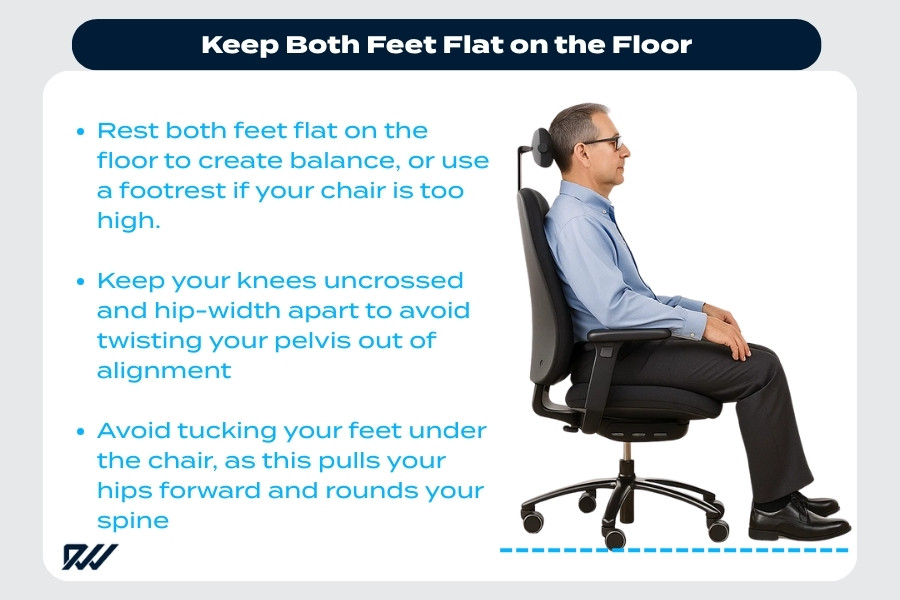
Lowering the chair is only half the battle—correct height matters most.
Keep Feet Flat on Floor or Footrest
Your feet should never dangle.
Ideal setup:
• Soles flat, weight evenly distributed
• Ankles neutral (not bent up or down)
• Legs supported from hip to knee
If feet don’t reach, use a footrest—even a sturdy box works temporarily.
Position Knees at a 90-Degree Angle
Check your posture:
• Sit back in the chair
• Thighs parallel to the floor
• Knees bent at 90°, level with or slightly below hips
This reduces pressure on your spine and improves circulation.
Adjust Armrests to Support Your Arms
Armrests should support—not raise—your arms.
Correct position:
• Elbows bent at 90° when typing
• Shoulders relaxed, not hunched
• Forearms resting lightly on armrests
If armrests force your shoulders up, lower them or remove them.
When to Seek Professional Repair Help
DIY fixes work in most cases, but some issues need expert attention.
Repair If the Mechanism Is Damaged or Missing Parts
Seek help when:
• The lever is broken off or internal linkage is damaged
• The gas cylinder won’t stay in the base
• Critical parts are missing from the screw mechanism
• Previous attempts failed or made it worse
Contact the Manufacturer for Warranty Support
If your chair is under warranty:
Provide:
• Model number (usually on a label under the seat)
• Proof of purchase
• Photos of the issue
• Description of what happens when you try to lower it
Possible outcomes:
• Free replacement cylinder
• Repair kit or instructions
• Full chair replacement (rare but possible)
Prevent Future Chair Height Problems
Keep your chair working smoothly with simple maintenance.
Clean and Lubricate the Gas Cylinder Every 6 Months
Steps:
• Wipe the cylinder with a dry cloth
• Apply a silicone-based lubricant (not oil) to the shaft
• Avoid getting lubricant on the base or casters
This prevents sticking and extends cylinder life.
Avoid Bouncing or Slamming Into the Chair
Many people “bounce” to adjust height—this damages the gas lift over time.
Better method:
• Use the lever properly
• Apply steady pressure when adjusting
• Never jump or drop into the chair
Key Takeaways for Lowering Your Office Chair
Most office chairs can be lowered using either a lever-based pneumatic system or a screw-based mechanical design. The right method depends on your chair’s mechanism. Always sit while lowering a lever chair, and rotate the seat clockwise while stabilizing the column on screw models.
If the chair won’t lower, check for obstructions, test the gas cylinder, or replace it if necessary. For users under 5’4″, even a properly lowered chair may require a footrest or a low-profile model for true comfort.
Maintain your chair with regular cleaning and avoid bouncing to extend its life. When in doubt, contact the manufacturer—especially if under warranty.
Take action today: adjust your chair, support your feet, and protect your posture. Your long-term comfort and productivity depend on it.
Frequently Asked Questions About Lowering Office Chairs
Why won’t my office chair go down when I pull the lever?
The gas lift cylinder may be defective or have lost pressure. Try sitting in the chair and pulling the lever fully up while applying slight downward pressure. If it still won’t lower, the cylinder likely needs replacement.
How do I lower a chair without a height adjustment lever?
Your chair likely uses a screw-based system. Stand it upright, insert a tool through the hole in the base to lock the center column, then rotate the seat clockwise to lower it.
Can I replace the gas cylinder in my office chair?
Yes, if the cylinder is removable. Measure the length, diameter, and cap style, then purchase a Class 3 or 4 replacement. Installation usually involves pressing the new cylinder into the base and reattaching the seat.
What should I do if the seat spins but doesn’t lower?
The center column isn’t locked. On screw-based chairs, use a screwdriver or Allen wrench through the base hole to hold the internal mechanism in place while rotating the seat.
How low should my office chair be for proper ergonomics?
Your seat should allow your feet to rest flat on the floor or a footrest, with knees at 90° and thighs parallel to the floor. Ideal height is typically 16–17 inches for shorter users.
Is it safe to cut the gas cylinder to make the chair lower?
No. Cutting the cylinder destroys the seal, makes the chair unstable, and can be dangerous. Instead, replace it with a shorter, compatible cylinder or use a footrest.