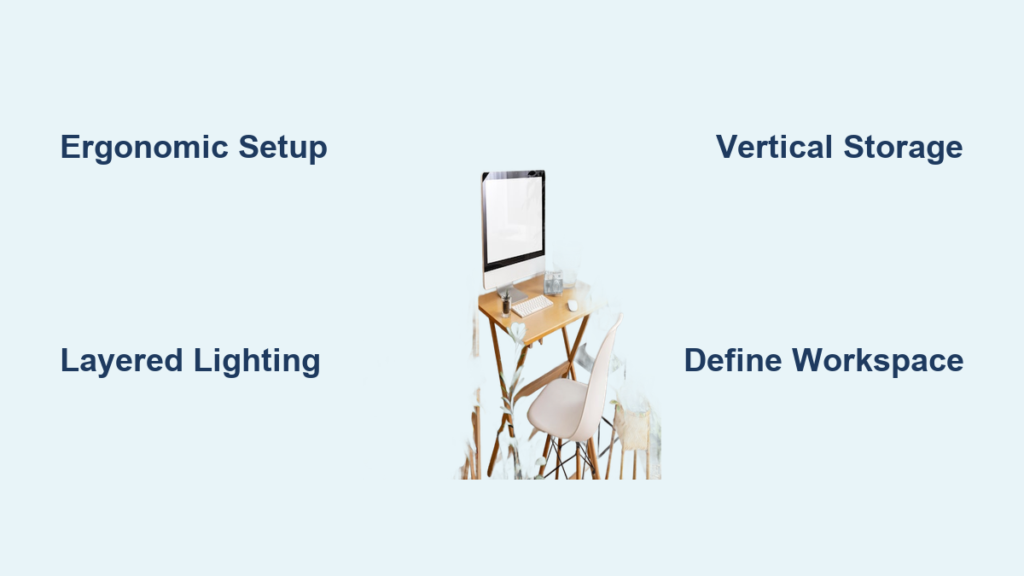
A cluttered, uncomfortable workspace doesn’t have to be your reality—even in a tiny room or shared corner. Learning how to decorate a small office isn’t about square footage; it’s about smart design choices that boost focus, comfort, and motivation. With the right layout, lighting, and personal touches, you can turn a cramped closet, bedroom nook, or kitchen counter into a professional, inspiring environment—all for under $50.
This guide reveals step-by-step, budget-friendly strategies to transform your compact workspace. You’ll learn how to prioritize ergonomics, use vertical space, choose the best lighting, and pick a style that fits your work personality—whether minimalist, boho, or pink aesthetic. Every tip is grounded in tested, real-world solutions to help you build a space that works as hard as you do.
Start with Ergonomics Before Adding Decor
Your body should never pay the price for a pretty desk. Before hanging art or buying plants, set up your workspace to support long hours of healthy, focused work.
Elevate Your Laptop to Prevent Neck Strain
Looking down at a laptop screen causes neck and shoulder pain over time. Fix this instantly:
• Use a stack of books or a $10 adjustable riser to lift your screen
• Align the top of the screen with your eye level when seated
• Pair with a compact wireless keyboard and mouse (~$18) to maintain a natural arm position
Pro Tip: A wireless setup reduces clutter and gives you more desk space.
Support Your Lower Back with a Lumbar Cushion
Most chairs lack proper spinal support, leading to fatigue and poor posture.
• Add a $12 lumbar cushion to your chair for instant comfort
• Adjust seat height so your feet rest flat and knees form 90-degree angles
• Upgrade to an ergonomic chair if you work 6+ hours daily
Block Noise with Affordable Focus Tools
In shared spaces, sound distractions break concentration fast.
• Wear $12 noise-canceling earbuds to silence background chatter
• Play free ambient tracks (rain, café sounds) from your phone to create a focus zone
• Use consistent audio cues—like a specific playlist—to train your brain for deep work
Install Layered Lighting to Reduce Eye Strain

Harsh overhead lights cause glare and headaches. Replace them with warm, adjustable lighting that supports both mood and productivity.
Use a Warm-White Desk Lamp for Task Clarity
Your main light source should be soft and directional.
• Choose a warm-white LED lamp (2700K–3000K) for around $25
• Pick one with a flexible arm to aim light exactly where needed
• Place it to the side of your monitor to avoid screen reflections
Add LED Strips Behind Your Monitor for Ambient Glow
This trick reduces eye fatigue and makes small spaces feel larger.
• Apply LED strip lights along the back edge of your monitor
• Use dimmable or warm white settings to match your environment
• The soft backlight eliminates the “black hole” effect on screens
Visual Cue: If your monitor looks like a dark void at night, you need ambient lighting.
Free Up Desk Space with Smart Storage Hacks
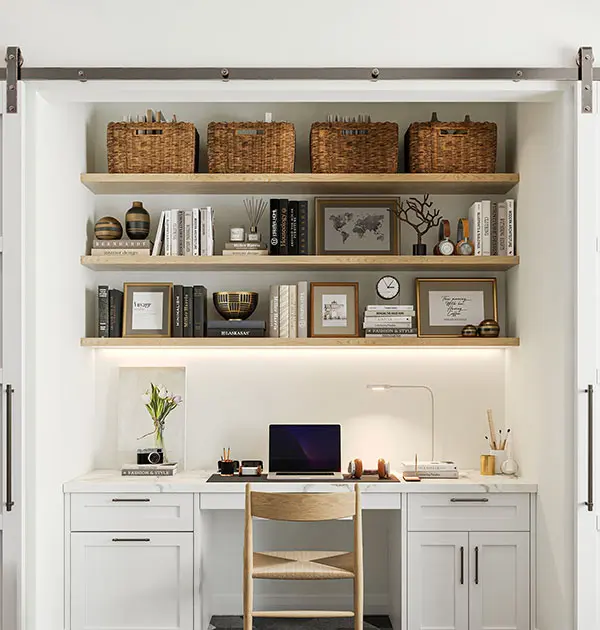
In a small office, clutter kills productivity. Use vertical and hidden storage to keep essentials close—but out of sight.
Mount Floating Shelves to Use Wall Space
Keep books, notebooks, and decor off your desk.
• Install $10 floating shelves above or beside your workstation
• Store frequently used items within arm’s reach
• Ideal for boho, study-inspired, or minimalist designs needing texture and function
Bundle Cables with Management Sleeves
Loose cords make even a clean desk look chaotic.
• Use $5 cable sleeves to group power cords and USB cables
• Label each cord if you switch devices often
• Tuck power strips behind the desk and secure with Velcro straps
Organize Supplies in Labeled, Hidden Bins
Only keep daily-use items visible.
• Store pens, chargers, and sticky notes in $8 labeled bins or drawers
• Color-code by category (e.g., blue for tech, green for files)
• Hide less-used items to maintain a clean, professional look
Define Your Workspace in Shared or Multi-Use Areas
Even without walls, you can create a psychological boundary that signals “work mode.”
Use a Desk Mat to Mark Your Territory
A simple mat instantly defines your personal zone.
• Choose a $10 desk mat with a calming texture or subtle pattern
• Covers worn desk surfaces while adding visual cohesion
• Works especially well in kitchen-adjacent or co-working setups
Place 3–5 Personal Items for Emotional Connection
Your brain recognizes space through familiar objects.
• Add a photo, journal, or small keepsake to anchor your focus
• Avoid overcrowding—limit to a few meaningful pieces
• These touches increase motivation and reduce mental fatigue
Choose a Design Style That Matches Your Work Personality

Your office should reflect how you work—not just how you like to decorate.
Go Minimalist for Focus and Professionalism
Best for corporate roles or deep work environments.
• Stick to neutral tones: white, gray, beige
• Hide all clutter with closed storage
• Add one statement lamp and a single plant for warmth
• Goal: clean lines, zero distractions, maximum efficiency
Try Boho for Creative, Cozy Energy
Ideal for freelancers, artists, or lifestyle entrepreneurs.
• Use rattan, linen, and wood textures in decor
• Hang a $12 macramé wall piece for visual interest
• Layer with a small rug and warm lighting
• Include plants and woven baskets for organic flow
Embrace Pink & Aesthetic Themes for Visual Joy
Popular in fashion, beauty, or social media fields.
• Use soft pink accents with gold or silver details
• Add pastel desk accessories and framed quotes
• Create a vision board or sticky-note inspiration wall
• Balance charm with function—don’t sacrifice usability
Design a Women’s Workspace That Feels Empowering
Elegant, personalized, and highly functional.
• Pair a sleek desk with an upgraded ergonomic chair
• Display framed quotes, journals, and photos
• Add subtle luxury: marble trays, velvet cushions, brass accents
• Prioritize comfort and self-expression
Build for Collaboration and Shared Energy
Perfect for hybrid or team-based setups.
• Include whiteboards or sticky-note walls for brainstorming
• Add a mini coffee station or water dispenser nearby
• Use modular furniture that reconfigures for meetings
• Place greenery between desks to soften shared zones
Adapt Your Decor to Your Room Type
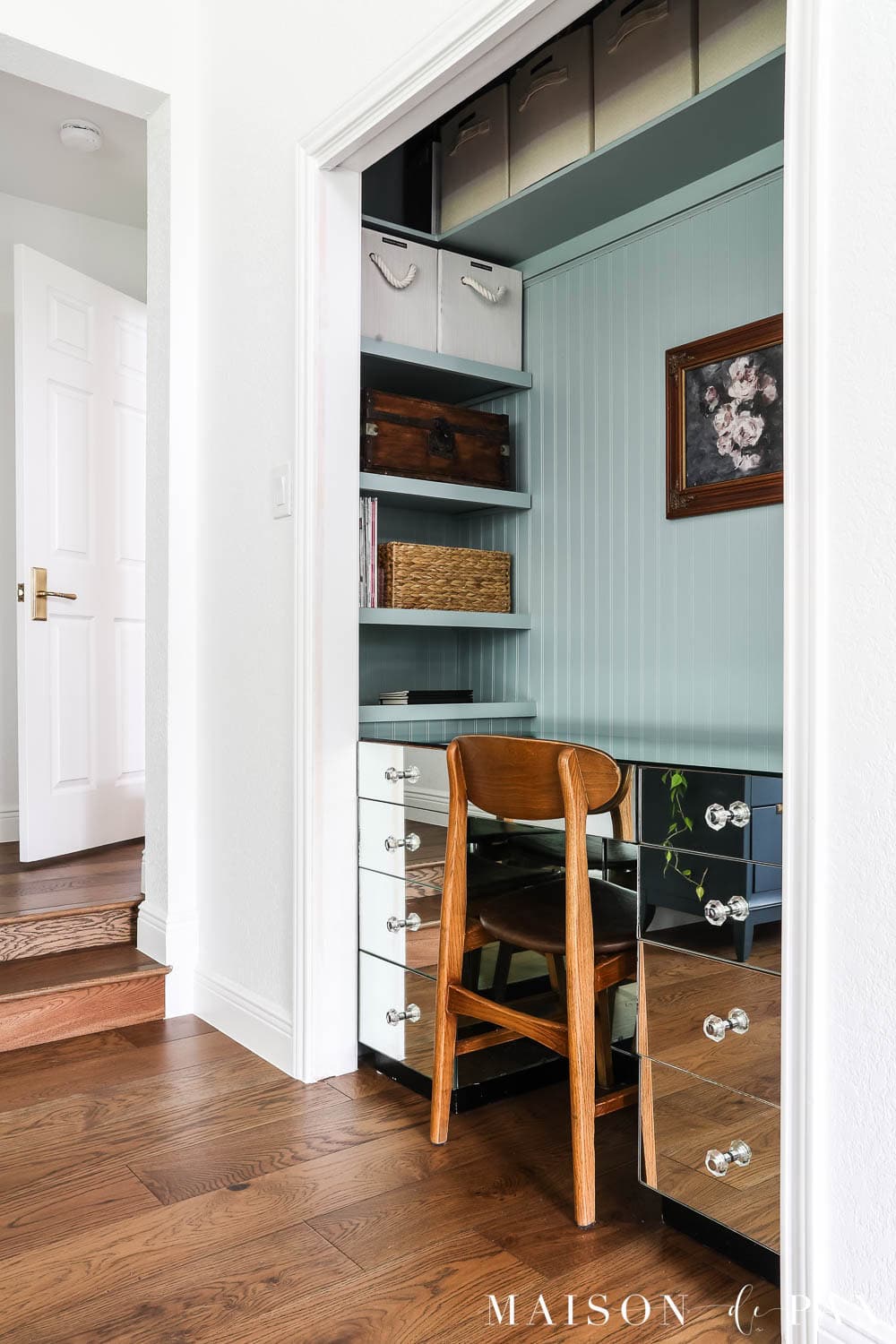
The location of your office changes how you optimize space and light.
Convert a Closet into a Private Office
Maximize unused space with smart upgrades.
• Remove or keep doors for privacy
• Install floating shelves and under-shelf baskets
• Use LED strip lighting along the ceiling or back wall
• Add a fold-down desk if floor space is limited
Time-Saver: Paint the inside white to make it feel brighter and larger.
Set Up an Attic Office with Sloped Ceilings
Work with the architecture, not against it.
• Place your desk under the highest point for comfort
• Use angled furniture or custom units to fit eaves
• Add extra task lighting—attics often lack windows
• Choose light walls and reflective surfaces to bounce light
Create a Bedroom Study Area Without Disrupting Sleep
Keep work and rest mentally separate.
• Face your desk away from the bed
• Use a room divider (bookshelf, curtain, screen) if possible
• Turn off screens 30 minutes before bed—use a physical alarm clock
• Store work materials out of sight at night
Design a Kitchen-Adjacent Workspace That Stays Focused
Avoid distractions with smart boundaries.
• Use a foldable or wall-mounted desk to save space
• Store supplies in rolling carts or under-counter cabinets
• Set strict work hours to separate productivity from downtime
• Add a small plant or art print to define the zone
Personalize Your Office for Under $50
You can transform your space without overspending. Here’s how to allocate wisely.
Smart Budget Breakdown (Total Under $50)
| Category | Items | Cost |
|---|---|---|
| Ergonomics | Laptop riser, keyboard/mouse, lumbar cushion | $40 |
| Lighting | Adjustable desk lamp | $25 |
| Storage | Floating shelf, cable sleeve, labeled bins | $23 |
| Personalization | Plant, framed quote, desk mat | $22 |
| Sound | Noise-canceling earbuds | $12 |
Note: Mix and match based on need. Start with ergonomics and lighting—everything else builds on that foundation.
Repurpose What You Already Own
Save money by getting creative.
• Stack books as a monitor stand
• Use mugs as pen holders
• Frame postcards or concert tickets instead of buying art
• Wrap old boxes in fabric for stylish storage bins
Boost Focus and Well-Being with Intentional Touches
A great office does more than look good—it helps you feel good and perform better.
Declutter Your Desk for Mental Clarity
Visual noise competes with focus.
• Keep only essential items on your desk
• Use drawer organizers or under-desk trays for hidden storage
• Wipe down surfaces daily to reset your mindset
Add a Low-Maintenance Plant for Mood and Air Quality
Even one plant makes a difference.
• Choose succulents or snake plants (~$7 in cute pots)
• Place near your dominant eye side (usually left) for subtle visual relief
• Plants reduce stress and improve indoor air
Create a Daily Workspace Ritual
Use your environment to support habits.
• Start by adjusting lighting and playing focus music
• End with a 2-minute tidy: clear papers, charge devices, reset your desk
• Use personal items—like a quote or photo—as mental anchors
Frequently Asked Questions About How to Decorate a Small Office
How can I make a small office look professional?
Use hidden storage, neutral colors, and a clean desk layout. Add one statement lamp and a plant for polish. Keep personal items minimal and meaningful.
What is the best lighting for a small home office?
Use a warm-white (2700K–3000K) adjustable desk lamp as your main light. Add LED strips behind your monitor for ambient glow and reduced eye strain.
How do I decorate a small office with no natural light?
Maximize artificial lighting with layered solutions: a task lamp, under-shelf LEDs, and warm ambient strips. Use light-colored walls and mirrors to reflect light.
What are the best small office design styles?
Top styles include minimalist (for focus), boho (for creativity), pink aesthetic (for joy), and professional women’s workspace (for elegance and empowerment).
How do I separate work and personal life in a shared space?
Use a desk mat, room divider, or shelf to define your zone. Set work hours, store supplies out of sight, and create a shutdown ritual to mentally “leave” work.
Can I decorate a small office for under $50?
Yes. Prioritize ergonomics (laptop riser, keyboard, lumbar cushion) and lighting first. Use repurposed items and add personality with plants, photos, and framed quotes.
Key Takeaways for Decorating a Small Office That Works
Decorating a small office is about strategy, not size. Start with ergonomics to protect your health, layer in warm, functional lighting, and use vertical storage to beat clutter. Define your space visually—even in shared areas—and choose a style that matches your work personality. With smart choices, you can create a productive, inspiring workspace for under $50.
Now, take action: assess your current setup, pick one improvement to make today—like raising your laptop or adding a desk lamp—and build from there. Your most focused, energized workday starts with the space you create.