Is your office chair dragging, wobbling, or scratching your floors? The culprit is likely worn-out casters. Replacing office chair wheels is a fast, affordable fix that restores smooth movement, protects your flooring, and extends your chair’s life. Most replacements take under 15 minutes and require only basic tools—or no tools at all. Whether you’re dealing with stuck casters or upgrading for hardwood floors, this guide walks you through every step: removing old wheels, choosing the right replacements, installing them correctly, and avoiding common mistakes. You’ll learn pro techniques, troubleshooting tips, and how to pick casters that match your floor type—so your chair rolls like new again.
This complete guide covers all methods, tools, and best practices from verified sources. You’ll discover how to remove stubborn wheels safely, install new ones without damaging the base, and upgrade to premium casters that last longer and protect delicate flooring. Whether you’re a beginner or a DIY pro, you’ll have everything you need to complete the job quickly and confidently.
Prepare Your Workspace
Choose the Right Chair Position
To access the casters easily, position your chair correctly before starting. Three methods work best:
- Upside down: Flip the chair completely over. This gives full access to all five wheels at once—ideal for replacing all casters quickly.
- On its side: Lay the chair on one side. This offers better leverage when removing stuck wheels and reduces strain on your back.
- Upright on a workbench: Place the chair on a sturdy table or bench. Use this method if you’re only replacing one wheel or have mobility concerns. Have someone hold it steady to prevent tipping.
Pick the method that suits your strength, space, and comfort. Just ensure the chair won’t slide or fall during the process.
Set Up a Clean, Stable Work Area
Use a flat, well-lit surface so you can see the caster sockets clearly. Keep your replacement wheels and tools within reach before you begin. A clutter-free workspace prevents losing small parts and speeds up the job. If working on carpet, consider placing a board underneath to avoid debris getting into the mechanism.
Gather the Right Tools

Essential Tools for Caster Replacement
Most office chair wheels can be removed and installed with just one or two simple tools:
- Flathead screwdriver: Best for prying out stuck casters. Insert it between the wheel stem and chair base to break the grip ring’s hold.
- Needle-nose pliers: Grip the metal strut (stem) of the caster for better leverage, especially when the wheel won’t budge by hand.
- Rubber mallet: Gently tap new casters into place without cracking plastic components.
- WD-40 or silicone spray: Loosen grime and corrosion in tight sockets, making removal and installation easier.
These tools handle 95% of caster replacements. Keep them ready before flipping the chair.
Optional but Helpful Supplies
- Cable ties or rubber bands: Temporarily secure a new caster if it pops out during installation.
- Cleaning brush or cloth: Clear dust, hair, and debris from the socket before inserting a new wheel.
- Wood block: Use with a hammer instead of a rubber mallet if you don’t own one—protects the caster from damage.
No-Tool Method Works Too
Many modern chairs use push-in casters that require no tools. If your wheels are worn but loose, you may be able to pull them out and press new ones in by hand. This method is fast and ideal for quick swaps.
Remove Old Chair Wheels
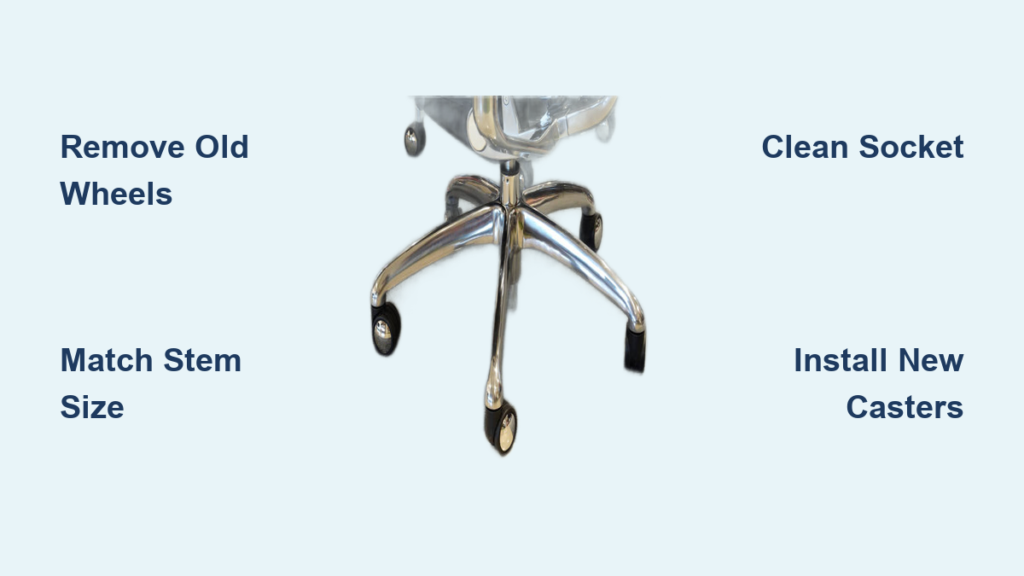
Pull and Pop Standard Casters
Start by grasping one wheel firmly. Pull straight down—some casters come out easily with hand pressure alone. If it resists, pull as far as it goes, then stop. Don’t yank violently; you could damage the chair base.
If the wheel sticks, move to the next step.
Use a Screwdriver to Break the Grip
Insert a flathead screwdriver between the top of the caster stem and the chair’s socket. Gently lever downward to create space. The caster is held by a 7/16-inch grip ring that expands inside the socket. This ring must compress to release the wheel.
Apply steady pressure. You should hear or feel a pop when the ring disengages. Repeat for each wheel.
Apply Leverage with Pliers
For stubborn wheels, grip the metal strut (the rod extending from the wheel) with needle-nose pliers. Push the pliers against the chair leg to create leverage while pulling down. This two-point force often frees stuck casters.
If needed, wiggle the wheel side to side to loosen the fit before pulling.
Deal with Stuck or Corroded Casters
When wheels won’t budge:
- Spray lubricant (WD-40 or silicone) into the socket. Let it sit for 1–2 minutes to break down grime.
- Wiggle the wheel gently to work the lubricant in.
- Use two tools: Insert the screwdriver on one side and pliers on the other for dual leverage.
- Avoid excessive force—you risk cracking the plastic base.
Sometimes, old casters are fused due to years of dirt buildup. In these cases, lubrication and patience win over brute strength.
Install New Chair Casters
Match the Stem Size First
Before installing, verify the new caster’s cylinder width matches the old one. Most office chairs use a 7/16-inch stem, but sizes vary. A mismatch means the wheel won’t seat securely—or worse, falls out later.
Check packaging or product specs to confirm compatibility. When in doubt, bring the old wheel when buying replacements.
Clean and Inspect the Socket
Use a screwdriver or brush to remove hair, dust, or debris from the socket. A clogged hole prevents the new caster from seating fully. Look for dents or misalignment—if the socket is damaged, the wheel may wobble.
Ensure the opening is smooth and round before proceeding.
Push in the New Caster
Align the new wheel’s stem with the socket. Push straight down with firm, even pressure. Most plastic casters click into place when fully seated.
If it resists:
- Lubricate the socket lightly with silicone spray to reduce friction.
- Use a rubber mallet to tap the back of the caster gently.
- Alternative: Place a wood block on top and tap with a hammer—never strike plastic directly.
Keep the stem straight. Angled pressure can bend the grip ring or damage the base.
Secure Loose Casters Temporarily
If a new wheel pops out during installation, wrap a cable tie or rubber band around the chair leg and over the caster. This holds it in place while you position the chair upright for testing.
Remove the tie once all wheels are installed.
Test and Balance the Chair
Check All Wheels Are Seated
After replacing all casters, inspect each one. The wheel should sit flush with the chair base—no gaps or tilting. If one sticks out, tap it in further with the mallet.
Uneven seating causes wobbling and uneven wear.
Spin Each Wheel by Hand
Rotate every caster to ensure it spins freely. If one drags or binds, remove it and check for debris or misalignment. A smooth-spinning wheel rolls quietly and effortlessly.
Roll the Chair on the Floor
Place the chair upright and roll it in all directions. It should glide smoothly without catching, squeaking, or leaning to one side.
If the chair wobbles, double-check that all casters are fully inserted and seated evenly.
Upgrade to Premium Casters

Why Standard Wheels Fail
Factory-installed casters are often made of hard plastic or low-grade rubber. They wear out fast, scratch floors, and jam with hair and dust. Over time, they lose rolling efficiency and stability.
Replacing them with premium casters transforms your chair’s performance.
Features of High-Performance Casters
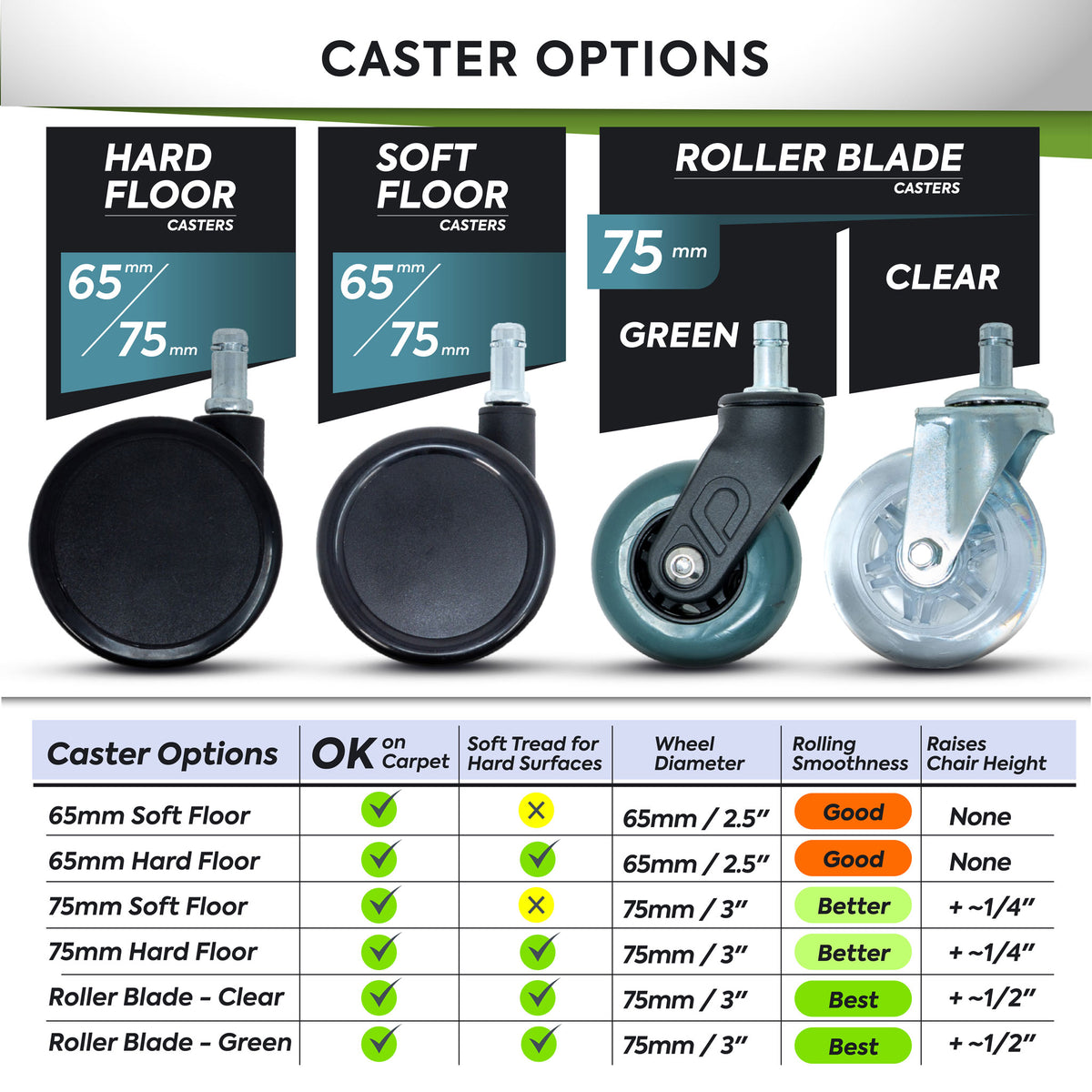
- Thermoplastic rubber (TPR) wheels: Soft, non-marking, and ideal for hardwood, tile, and bamboo.
- Heat-treated raceways: Handle heavier loads and last longer than standard bearings.
- Swivel seals: Keep dirt and debris out of the mechanism.
- Thread guards: Protect the axle and reduce friction.
- Chrome-plated stems: Resist corrosion and slide in smoothly.
These upgrades prevent future issues and protect your flooring.
Choose Wheels by Floor Type
Best Wheels for Hardwood Floors
Use soft rubber or TPR wheels. They’re non-marking, quiet, and provide excellent grip without scratching. Avoid hard plastic—they can dent or scuff wood over time.
Best for Tile or Linoleum
Hard plastic or dual-wheel casters work well here. These floors are more durable, so slightly firmer wheels offer better mobility.
Avoid Carpet-Only Casters on Hard Floors
Some casters are designed for deep pile carpets and have long stems. They may not fit or function properly on hard surfaces. Always check compatibility.
Troubleshoot Common Issues
Wheel Won’t Come Out
- Spray WD-40 into the joint and wait 2 minutes.
- Wiggle side to side while pulling.
- Use pliers and screwdriver together for dual leverage.
- Never use excessive force—risk of base damage is high.
New Wheel Won’t Fit
- Confirm the stem size matches (usually 7/16″).
- Clean the socket thoroughly.
- Lubricate with silicone spray.
- Tap gently with a rubber mallet—don’t hammer aggressively.
Wheel Falls Out After Installation
This usually means:
- The stem is too narrow for the socket.
- The grip ring didn’t expand properly.
- The wheel wasn’t pushed in fully.
Replace with the correct size and ensure it clicks into place.
Wheel Doesn’t Spin Smoothly
- Check for hair or thread wrapped around the axle.
- Ensure the caster is flush with the base.
- Verify all wheels are the same type and height.
Maintain Long-Term Performance
Clean Wheels Regularly
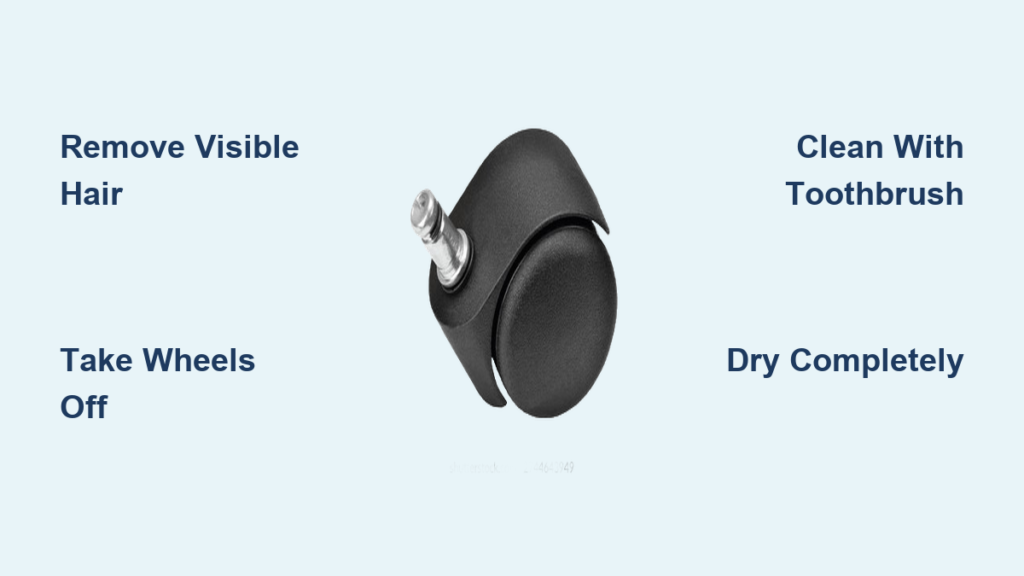
Dust and hair buildup reduce mobility. Every few months, remove the casters and clean the wheels and sockets. A quick wipe or brush takes seconds but prevents long-term sticking.
Keep Spares On Hand
Buy an extra set of casters when upgrading. When one fails, replace all five at once for balanced rolling. Having spares means no downtime.
Lubricate Periodically
Apply a light spray of silicone lubricant to the sockets every 6–12 months. This keeps insertion smooth and prevents corrosion.
Frequently Asked Questions About Changing Office Chair Wheels
Can I replace office chair wheels without tools?
Yes, many modern chairs use push-in casters that can be removed and installed by hand. If the wheels are loose, you can pull them out and press new ones in with firm hand pressure. For stuck wheels, tools like a flathead screwdriver or pliers will help.
What size are most office chair casters?
Most office chair wheels have a 7/16-inch diameter stem. Always check the size of your old caster before buying replacements. A mismatch can cause poor fit, wobbling, or wheels falling out.
Why do my new chair wheels keep falling out?
Wheels fall out due to a stem size mismatch, incomplete insertion, or a damaged grip ring. Ensure the new caster’s stem matches the old one, push it in until it clicks, and verify it sits flush with the base.
How do I know if I need soft or hard casters?
Choose soft casters (like TPR or rubber) for hardwood, bamboo, or laminate floors to prevent scratches. Use hard plastic casters for tile, linoleum, or commercial flooring where durability matters more than floor protection.
Can I mix caster types on the same chair?
No, always use the same type and size of caster on all five legs. Mixing types causes uneven rolling, wobbling, and premature wear. Replace all wheels at once for balanced performance.
How often should I replace office chair wheels?
There’s no fixed timeline—replace them when they crack, stick, or lose smooth rolling. With regular cleaning and maintenance, quality casters can last 3–5 years. Inspect them every 6 months for signs of wear.
Key Takeaways for Replacing Office Chair Casters
Replacing office chair wheels is a simple, cost-effective upgrade that restores smooth movement and protects your floors. Use the right tools—screwdriver, pliers, and rubber mallet—for stuck casters, and always match the 7/16-inch stem size for a secure fit. Clean sockets before installing new wheels, and consider upgrading to TPR or premium casters for better performance and floor safety.
For best results, replace all five wheels at once, test for even seating and smooth rolling, and keep spares on hand. With just 10–15 minutes of effort, you can transform a wobbly, floor-damaging chair into a smooth-gliding workstation essential. Take action today—your chair (and your floors) will thank you.