If you spend hours working at a desk, you’ve probably noticed unsightly dents and frayed carpet fibers under your office chair. The small casters concentrate your weight into tiny points, sinking into carpet padding and tearing delicate fibers—especially on plush, cut-pile carpets. Over time, this leads to permanent divots, fiber damage, and expensive carpet repairs. The good news? You don’t have to live with it. Whether you’re on a tight budget or want a long-term, high-end fix, there are proven ways to protect carpet from office chair damage without sacrificing comfort or style.
From DIY builds to premium glass mats and caster swaps, this guide covers every effective solution backed by real user data, longevity tests, and performance comparisons. You’ll learn what actually works, what fails over time, and how to choose the best method for your space, budget, and carpet type.
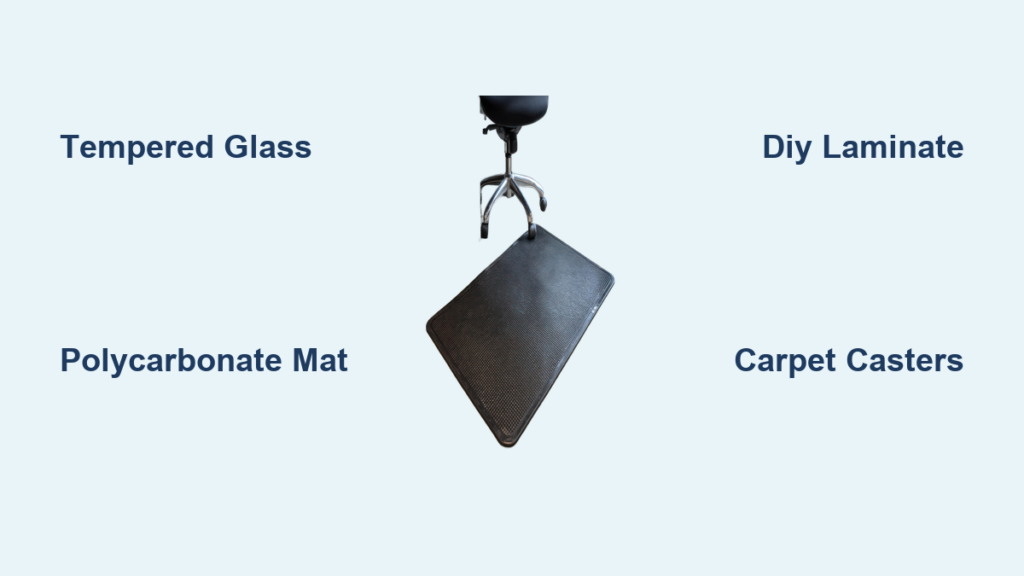
Choose the Best Chair Mat Material for Your Carpet

Why Standard Plastic Mats Crack and Fail
Standard clear plastic chair mats are the most common choice—but also the most disappointing. Despite their low upfront cost, they typically crack within 6 to 24 months, especially along caster paths. Even thicker “premium” versions still allow permanent divots to form through the mat, compressing the carpet underneath. Once cracks appear, they spread quickly, making the mat unsafe and ineffective.
Users consistently report that plastic mats:
• Develop stress fractures from repeated rolling
• Allow dents in carpet padding despite use
• Curl at the edges over time
• May emit odors (though rarely cause discoloration)
While easy to install, plastic mats are a short-term fix with high long-term replacement costs.
Tempered Glass Mats: No Dents, No Cracks, No Maintenance
Tempered glass mats are one of the most durable solutions available. Unlike plastic, glass does not dent or crack under normal use—it’s engineered to either stay intact or safely shatter into small, blunt pieces under extreme impact.
Key benefits:
• Zero divot formation—maintains a perfectly flat surface
• No outgassing—won’t discolor or stain carpet
• Odorless and stain-resistant
• Smooth rolling for casters
• Lays flat permanently—no curling
One user reported using a glass mat from School Specialty with no issues after years of daily use. The only downside is weight—glass mats are heavy, making them harder to move, but this also prevents sliding.
Best for: Deep-pile carpets, long-term setups, and anyone concerned about carpet discoloration.
Polycarbonate Mats: Durable with Lifetime Warranty Protection
Polycarbonate mats, like those from Floortex, are engineered for strength and come with a limited lifetime warranty. This material is significantly stronger than standard plastic and resists cracking far longer.
Real-world results:
• One user’s mat lasted 2 years before cracking
• The company honored the warranty and replaced it free of charge
While not indestructible, polycarbonate offers excellent value when combined with warranty protection. It’s lighter than glass and still provides a smooth rolling surface.
Best for: Users who want a balance of strength, performance, and long-term support.
Solid Bamboo Mats: Natural Look with Real Durability
Tri-fold solid bamboo mats offer a stylish, natural alternative to plastic. Unlike cheaper multi-slat rolled versions, tri-fold designs provide stability and full coverage.
Pros:
• Aesthetic appeal—looks like real hardwood
• Durable on carpeted floors
• Lays flat without curling
Avoid inexpensive, multi-slat bamboo mats—they can separate or warp over time.
Best for: Home offices where appearance matters.
Build a Budget-Friendly DIY Chair Mat
Laminate Over Plywood: Under $50 for Two Mats
One of the most cost-effective and visually appealing solutions is a DIY mat made from laminate flooring glued to ½” plywood. Total cost? Under $50 for two mats—a fraction of premium plastic or glass.
Materials needed:
• ½” plywood (4’ x 8’ sheet, cut in half)
• 2 boxes of laminate flooring
• Construction adhesive
• Clamps, razor blade, circular saw
Steps:
1. Measure your space—leave ½” clearance around desk legs and drawers
2. Dry-fit the laminate to avoid repeating patterns
3. Score and remove the tongue on all edges for a flush fit
4. Glue planks to plywood, clamp, and press tightly
5. Trim excess with a circular saw using a 2×4 as a guide
6. Let cure 24 hours under weight
7. Add corner trim to prevent rolling off
The result is a sturdy, hardwood-look mat that supports your chair and protects your carpet. If one mat wears out, just replace it—no need to redo the whole setup.
Pro tip: Use matte-finish laminate to reduce screen glare.
Plywood-Only Solutions That Prevent Carpet Damage
For a simpler DIY option, 3/4” AC plywood works exceptionally well—especially when combined with other elements.
Option 1: Plywood + Thick Rug
• Cut plywood to fit under your desk (e.g., “T” shape)
• Cover with a thick, non-slip throw rug
• Provides cushioning, protection, and style
Option 2: Plywood + Plastic Mat
• Place a 4’x4’ piece of 3/4” plywood under a plastic mat
• Add faux-sticky kitchen drawer liner between layers to prevent slipping
• One user reported no carpet discoloration after 12+ years
This combo eliminates divots and extends the life of the plastic mat by distributing weight evenly.
Avoid 1/4” plywood alone—it may flex and increase outgassing risk.
Does Plywood Discolor Carpet? Real-World Data
A common concern is whether plywood will outgas and stain carpet over time. While formaldehyde emissions are possible with some engineered wood, real-world data is reassuring:
• A 12-year test using 3/4” plywood under a plastic mat showed no discoloration
• The mat and liner likely acted as a barrier
To minimize risk:
• Use exterior-grade plywood (lower emissions)
• Seal edges with polyurethane
• Place a liner or rug between plywood and carpet
Try Non-Mat Solutions That Work
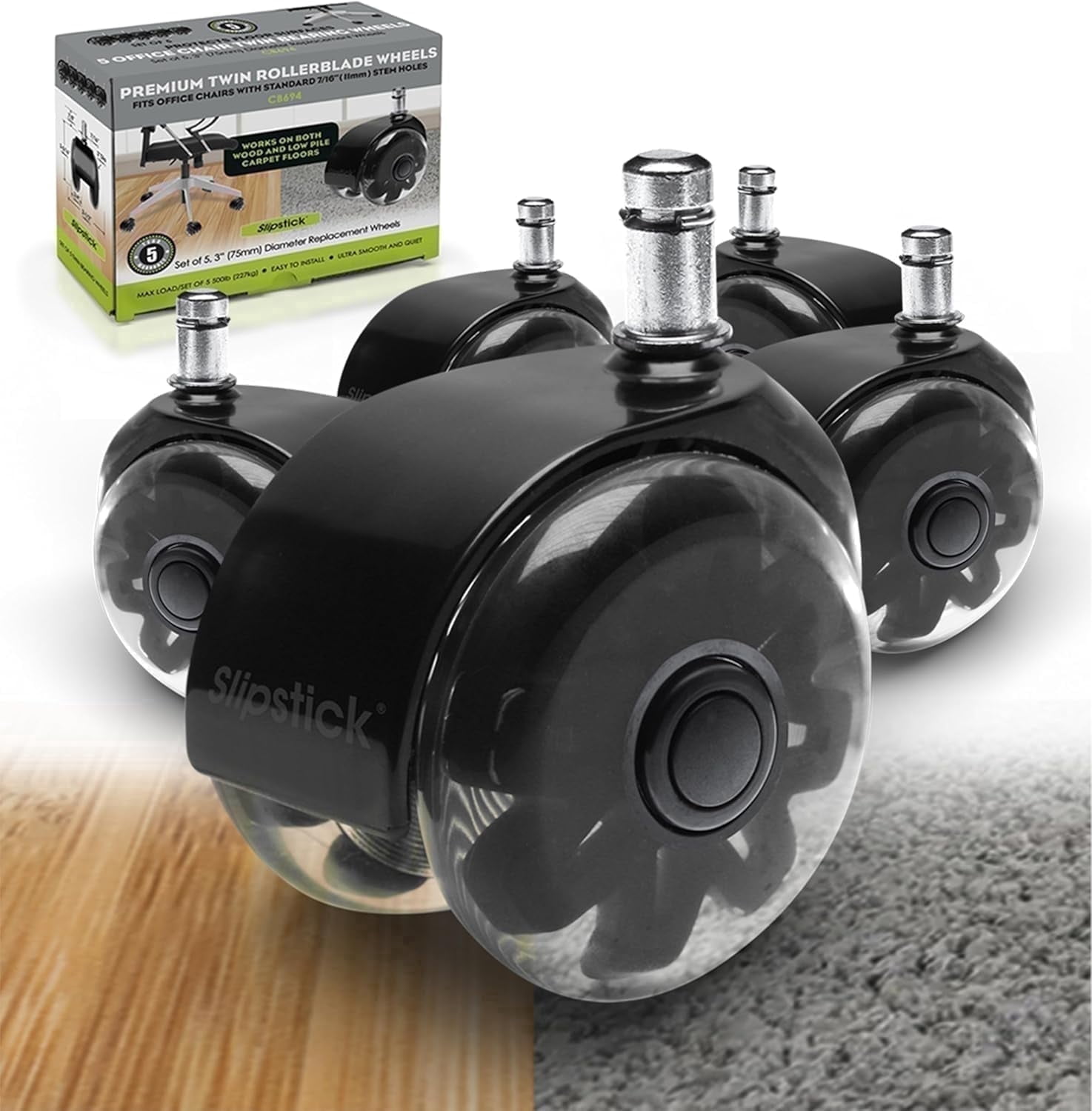
Replace Chair Casters with Carpet-Friendly Wheels
Skip the mat entirely by replacing standard casters with carpet-optimized wheels. These are wider and softer, distributing weight to prevent sinking and fiber damage.
How to do it:
1. Flip the chair and remove old casters (pull straight out)
2. Insert new carpet casters (push firmly until they click)
3. Test rolling on carpet
One user reported complete success—no mat needed, and the chair rolls smoothly.
Best for: High-quality chairs on medium-pile carpet. May not work on deep plush.
Use a Thick Rug as Floor Protection
A thick, non-slip rug from stores like HomeGoods can double as a chair mat.
Requirements:
• Must be dense enough to support chair weight
• Should have rubber or felt backing to prevent sliding
• Works best with quality casters
Advantages:
• Enhances room décor
• No installation—just unroll and use
• Rolls well with good office chairs
Ideal for renters or those who want a stylish, temporary fix.
Compare Solutions by Your Priority

Best Budget Option: DIY Laminate-Plywood Mat
• Cost: Under $50 for two
• Durability: High (with plywood base)
• Aesthetics: Looks like hardwood
• Effort: Moderate (requires tools and 2–3 hours)
Best Long-Term Investment: Glass or Polycarbonate
| Option | Lifespan | Warranty | Cost |
|---|---|---|---|
| Tempered Glass | Indefinite | Varies | $150–300+ |
| Polycarbonate (Floortex) | 2+ years (replaceable) | Limited lifetime | $100–200 |
Glass wins for zero maintenance and no failure risk. Polycarbonate offers warranty-backed value.
Best for Appearance: Thick Rug or Bamboo Mat
• Thick decorative rug: Blends with décor, hides wear
• Bamboo tri-fold: Natural wood look, durable
• Polyester/PVC core mat: Looks like carpet, folds for storage
Avoid clear plastic if aesthetics matter.
Best for Deep-Pile Carpet: Rigid Base Required
Plush carpets need maximum support. Soft mats sink, and even carpet casters struggle.
Top solutions:
1. Tempered glass mat – lays flat, no divots
2. 3/4” plywood base – proven for 12+ years
3. Polycarbonate – strong enough to resist compression
Install and Maintain Your Chair Protection
Quick Installation Guide
| Solution | Steps | Time |
|---|---|---|
| Glass/Polycarbonate Mat | Unpack, place, use | 5 minutes |
| Carpet Casters | Remove old, insert new | 10 minutes |
| Thick Rug | Unroll, position | 5 minutes |
| DIY Laminate Mat | Cut, glue, trim, cure | 2–3 hours + 24h cure |
Maintenance Tips by Type
• Glass: Clean with glass cleaner; check for edge chips
• Polycarbonate: Wipe with plastic-safe cleaner; inspect for cracks
• Plywood: Keep dry; vacuum if covered with rug
• Rug: Vacuum weekly; rotate for even wear
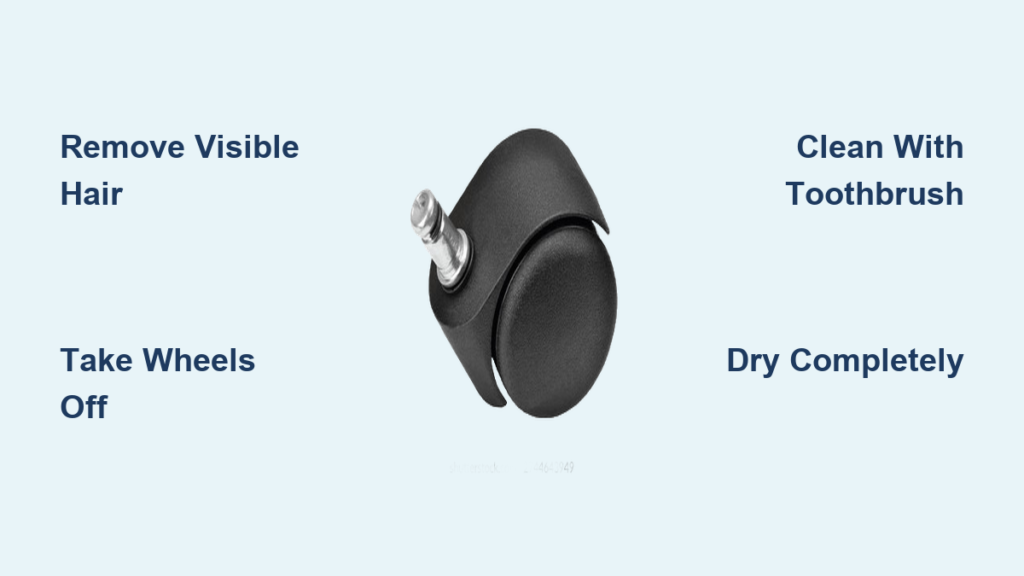
• Casters: Clean wheels monthly; remove hair/debris
Frequently Asked Questions About Protecting Carpet from Office Chairs
Can office chair casters ruin carpet?
Yes. Standard casters concentrate your weight into small points, compressing padding and tearing fibers—especially on cut-pile or plush carpets. Over time, this leads to permanent dents and fraying. Using a mat or carpet-friendly casters prevents this damage.
Do chair mats stop carpet dents?
Only rigid mats like tempered glass, polycarbonate, or plywood prevent dents. Even premium plastic mats allow divots to form through the material. For full protection, choose a mat that doesn’t flex under load.
Are glass chair mats safe on carpet?
Yes. Tempered glass mats are safe and highly effective. They do not crack under normal use, lay flat, and prevent all carpet dents. The only concern is weight—ensure your carpet can support the added load (typically 30–50 lbs).
How do I stop my chair from tearing carpet fibers?
Replace standard casters with carpet-friendly wheels—they’re wider and softer, distributing weight evenly. Alternatively, use a rigid mat (glass, plywood, or polycarbonate) to eliminate direct contact between casters and carpet.
Can plywood discolor carpet over time?
While outgassing is a concern with engineered wood, a 12-year test using 3/4” plywood under a plastic mat showed no discoloration. To be safe, use exterior-grade plywood, seal the edges, or place a liner between the wood and carpet.
What is the most durable chair mat for carpet?
Tempered glass is the most durable—immune to dents, cracks, and outgassing. Polycarbonate mats with a lifetime warranty (like Floortex) are a close second, offering replaceable protection. Both outperform plastic long-term.
Key Takeaways for Protecting Your Carpet from Office Chair Damage
The best way to protect carpet from office chair damage depends on your priorities. For maximum durability, go with tempered glass. For lowest cost, build a laminate-plywood mat. To eliminate mats entirely, swap to carpet-friendly casters. And if style matters, a thick decorative rug or bamboo mat delivers both function and flair.
With the right solution, your carpet can stay dent-free for years—no compromises needed. Start by assessing your carpet type, budget, and aesthetic needs, then choose the method proven to last.