Is your office chair suddenly dragging, sticking, or refusing to roll smoothly? The issue is likely worn-out casters—those small wheels that let you glide across the floor with ease. The good news? Replacing casters on an office chair is a quick, affordable fix that takes less than 15 minutes and requires only basic tools. Whether you’re protecting hardwood floors, restoring smooth movement, or upgrading to premium wheels, this guide gives you a step-by-step plan to remove stubborn casters, install new ones correctly, and avoid common mistakes.
You’ll learn how to identify the right replacement size, use leverage tools safely, and test your chair for stability. With the right fit and a little effort, you can revive your chair’s performance and skip the cost of buying a new one.
Remove Old Casters from Chair Base
Pull Casters Out by Hand First
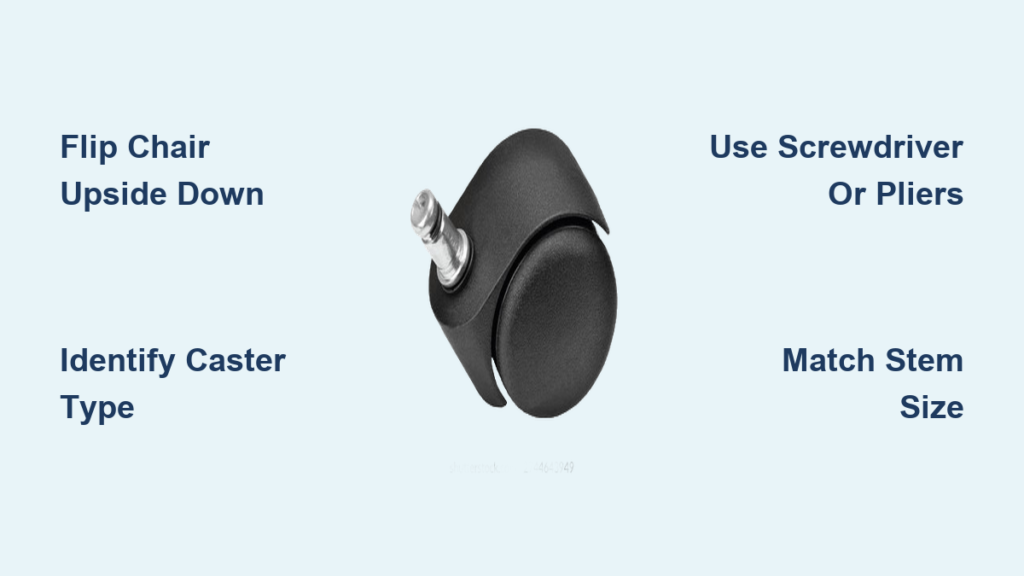
Flip your chair upside down onto a flat, stable surface. Grip each caster firmly and pull straight up with steady pressure. Many office chairs use pressure-fit casters with a 7/16″ grip ring stem that expands inside the base—so some resistance is normal. Wiggle the caster side to side while pulling to help break the seal. If it pops out easily, move to the next one. If not, don’t force it. Try a leverage tool instead.
Use a Flathead Screwdriver to Pry Stuck Casters
For casters that won’t budge, insert a flathead screwdriver between the top of the caster and the chair leg. Use the base as a fulcrum and gently pry upward. Apply even pressure to avoid cracking the plastic housing. This method works well on older chairs where dust and debris have caused the stem to seize. Lift just enough to break the grip, then finish pulling by hand.
Apply Pliers for Extra Leverage
When hand pressure and a screwdriver aren’t enough, use needle-nose pliers to grip the metal strut extending from the wheel. Push upward against the chair base for added leverage. For better control, grip both the wheel and the leg simultaneously. If the strut is too short, use standard pliers on the wheel housing and twist slightly while pulling up.
Loosen with Lubricant Before Forcing Removal
If casters remain stuck, spray a small amount of WD-40 or silicone lubricant where the stem meets the socket. Let it sit 2–3 minutes to penetrate the joint. The lubricant reduces friction and helps release the grip ring. After applying, try pulling again—by hand or with pliers. Avoid overspraying, as excess can damage flooring or upholstery.
Know How the Grip Ring Stem Works
Most office chairs use a 7/16″ grip ring stem, typically 7/8″ to 1″ long. When inserted, the ring expands inside the chair’s tubing, creating a tight, secure fit. Over time, this connection can become tighter due to compression or debris. Understanding this mechanism explains why removal sometimes requires tools—and why replacement stems must match exactly.
Prepare the Chair Base for New Caster Installation

Clean Each Socket Thoroughly Before Installing
After removing old casters, inspect each socket on the chair base. Use a screwdriver or cloth to remove dust, hair, or debris that could block proper seating. If the socket feels tight or misaligned, gently scrape the interior to clear obstructions. A clean socket ensures a smooth fit and prevents future sticking.
Lubricate Sockets for Easier Insertion
Lightly coat the inside of each socket with silicone spray or WD-40. This step is especially helpful when installing premium casters with fully expanded grip rings. The lubricant reduces friction and helps the stem slide in smoothly. Wipe away any excess to avoid residue buildup.
Test Fit One New Caster Before Full Installation
Press one new caster into a socket to test the fit. It should start to seat with firm hand pressure. If it won’t go in at all, check the strut width—a mismatch is the most common cause of installation failure. The new stem must match the old one exactly. Too narrow, and the caster will fall out; too wide, and it won’t fit.
Choose the Right Caster Type for Your Flooring
Not all casters work on every surface. Match your choice to your flooring:
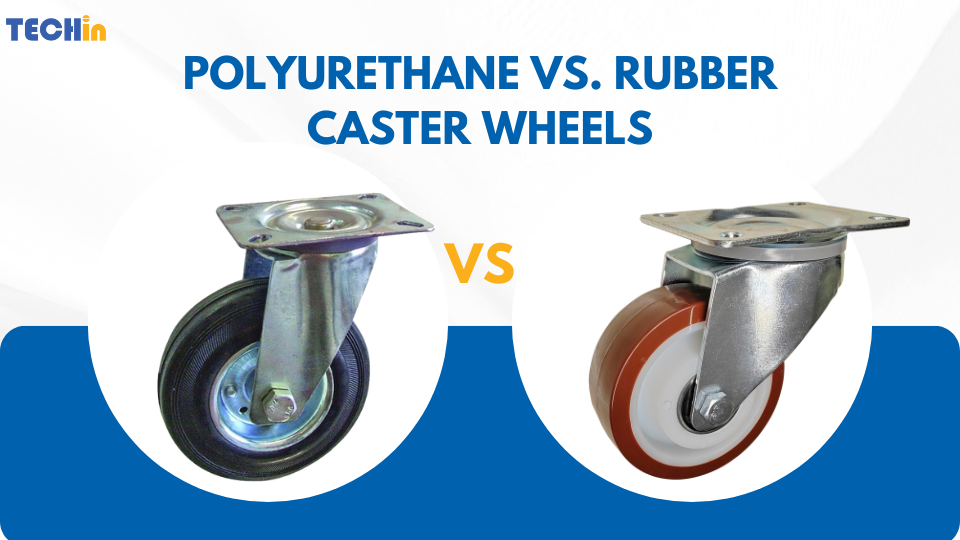
• Hardwood, tile, bamboo: Use soft rubber or thermoplastic rubber wheels to prevent scratches
• Carpet or mixed surfaces: Opt for harder polyurethane casters for better roll and durability
• Need stability? Consider locking casters that prevent movement during intense tasks
Install New Office Chair Casters Correctly
Push New Casters Into Place by Hand
Align the stem of the new caster with the socket hole. Press down firmly and evenly—don’t push at an angle. You should feel resistance, then a slight “click” or firm seating when fully inserted. Keep pressure steady until the caster is flush with the base. Repeat for all five legs.
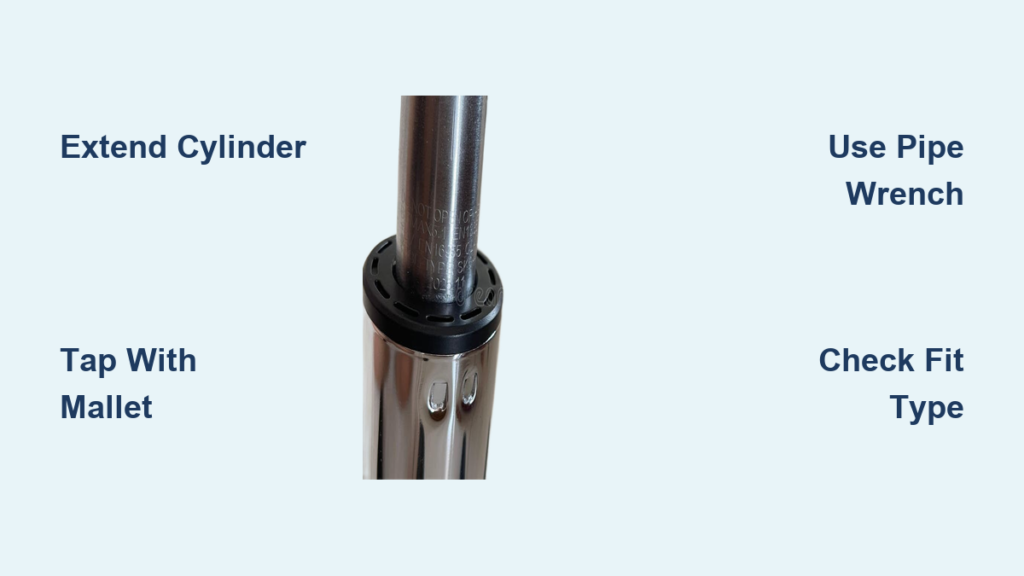
Tap with a Rubber Mallet If Needed
If the caster resists hand pressure, use a rubber mallet to gently tap the back of the raceway (the housing behind the wheel). This is common with premium casters designed for a tighter fit. Never use a metal hammer directly—place a cloth over the caster and tap lightly. Continue until the caster is fully seated and level with the base.
Avoid These Common Installation Mistakes
• Don’t force it: Excessive pressure can crack the plastic housing or damage the base
• Don’t skip alignment: Angled insertion can bend the stem or deform the socket
• Don’t mix sizes: All five casters must be identical for balanced movement
Test Your Chair After Caster Replacement
Check That All Casters Are Fully Seated
Flip the chair upright and inspect each wheel. All should sit flush with the base—no gaps or wobbling. If one caster sticks out or spins unevenly, remove and reseat it. Ensure all wheels are the same type and size.
Roll the Chair Across Different Surfaces
Test the chair on your usual flooring—carpet, hardwood, tile, or a mix. It should roll smoothly and quietly, with no dragging or resistance. Listen for squeaks or grinding, which may indicate debris or misalignment.
Confirm Stability and Smooth Movement
Sit in the chair and shift your weight. There should be no wobble or uneven contact. If the chair tips or drags on one side, double-check that all casters are fully installed and properly seated.
Choose the Best Replacement Casters for Your Chair
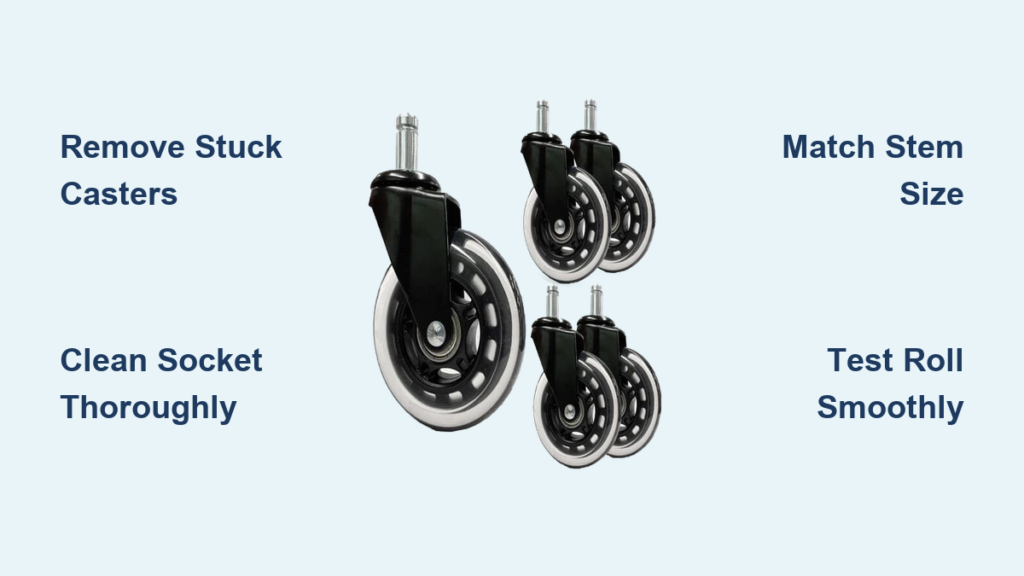
Match Stem Size Exactly to Avoid Failure
The stem diameter (7/16″) and length (7/8″–1″) must match your chair’s sockets. Most office chairs use standard pressure-fit stems, but always verify before buying. Measure the old stem or compare it side-by-side with the new one.
Upgrade to Premium Caster Features
Consider casters with:
• Heat-treated raceways for higher weight capacity
• Sealed swivel bearings to block dust and hair
• Thread guards that prevent lint buildup on the axle
• Chrome-plated finish for corrosion resistance
These features extend caster life and improve performance, especially in high-use environments.
Protect Your Floors with the Right Wheel Material
Soft rubber or non-marking thermoplastic rubber wheels are essential for delicate floors. They roll quietly and leave no scuff marks. Harder polyurethane is better for deep carpet, where softer wheels might sink and drag.
Troubleshoot Common Caster Replacement Issues
Caster Won’t Come Out? Try These Fixes
• Apply lubricant and wait a few minutes
• Use pliers and screwdriver together for maximum leverage
• Wiggle and pull side to side to break the grip ring
Caster Won’t Go In? Check These First
• Clean the socket again—debris is the usual culprit
• Verify stem width—too narrow means it won’t lock; too wide means it won’t fit
• Tap gently with a mallet—don’t force it
Caster Falls Out After Installation?
This almost always means the stem is too narrow. Replace with the correct size. Never use casters labeled “universal” without checking compatibility.
Chair Still Wobbles After Replacement?
Check that all casters are fully seated and of the same height. A single misaligned caster throws off balance. Replace any damaged legs or bases if the problem persists.
Save Time and Avoid Costly Mistakes
Replace All Casters at Once
Even if only one is damaged, replace the full set. Mixing old and new leads to uneven rolling and premature failure. Consistent caster height and wear ensure smooth, balanced movement.
Keep Old Casters as Emergency Spares
Wear and tear happens fast. Store the old set in your desk drawer—they’re useful for temporary fixes or travel.
Clean Wheels Regularly to Prevent Stiffness
Hair, thread, and dust build up quickly. Every few weeks, remove casters and clean the axles with a brush or scissors. This prevents stiffness and extends life.
Work One Caster at a Time
Remove and install casters one by one. This keeps you organized and prevents confusion about fit or orientation.
Key Takeaways for Replacing Office Chair Casters
Replacing casters on an office chair is a fast, cost-effective way to restore mobility and protect your floors. With the right tools—like a flathead screwdriver, pliers, and rubber mallet—you can remove stubborn wheels and install new ones in under 15 minutes. Always match the stem size exactly, clean the sockets, and test fit before full installation. Choose floor-friendly wheels based on your surface, and consider premium features for longer life.
Now that your chair rolls smoothly again, take a moment to inspect the base for cracks or warping. A damaged base can undermine even the best casters. If needed, replacement bases are often available separately.
Frequently Asked Questions About Replacing Office Chair Casters
How do I know what size casters to buy?
Check the stem diameter and length of your old casters. Most use a 7/16″ diameter stem that’s 7/8″ to 1″ long. Measure it or compare side-by-side with replacements before buying.
Can I replace office chair casters without tools?
Yes, if they’re loose. Grip and pull straight up with steady pressure. For stuck casters, you’ll likely need a flathead screwdriver or pliers for leverage.
Why won’t my new casters stay in?
The stem is probably too narrow. The grip ring must expand fully inside the socket to lock in place. Always verify compatibility before installation.
What’s the easiest way to remove stuck casters?
Use a flathead screwdriver to pry between the caster and base, or apply WD-40 to loosen the joint. For extra grip, use pliers on the metal strut while pushing against the chair leg.
Should I replace all casters at once?
Yes. Even if only one is damaged, replacing the full set ensures even height, consistent roll, and balanced support. Mixing old and new causes instability.
How can I protect hardwood floors when replacing casters?
Choose soft rubber or thermoplastic rubber wheels labeled “non-marking.” These roll smoothly without scratching or scuffing delicate surfaces.