Is your office chair suddenly stiff, squeaky, or refusing to roll smoothly? Chances are, hair tangled in the wheels is the real culprit. Over time, human or pet hair wraps tightly around caster axles, trapping dust and debris that block movement. The good news: this common issue is easy to fix with basic tools and a few minutes of effort. In this guide, you’ll learn how to fully remove hair from office chair wheels, clean each component thoroughly, and prevent future buildup—no professional help needed.
You’ll discover the fastest way to pull out visible tangles, the most effective deep-cleaning method, and smart prevention tips to keep your chair rolling like new. Whether you work from home, share space with pets, or just want a smoother glide, this step-by-step process restores full mobility fast.
Pull Out Visible Hair First
Start by removing as much hair as possible without tools. This quick step eliminates the bulk of surface tangles and makes deeper cleaning far more effective.
Grasp and Pull Hair Strands
Flip the chair upside down and inspect each wheel. Look for hair clumps sticking out from the sides or wrapped around the axle. Use your fingers or needle-nose pliers to grip the strands and pull them in the direction they’re wound. Work slowly around the entire wheel to catch all accessible tangles.
Pro Tip: If the hair is tightly packed, use pliers for better grip. Avoid yanking—this can damage plastic parts.
Once no more hair comes free by hand, move on to removing the wheels for a complete clean.
Remove Wheels Safely and Easily
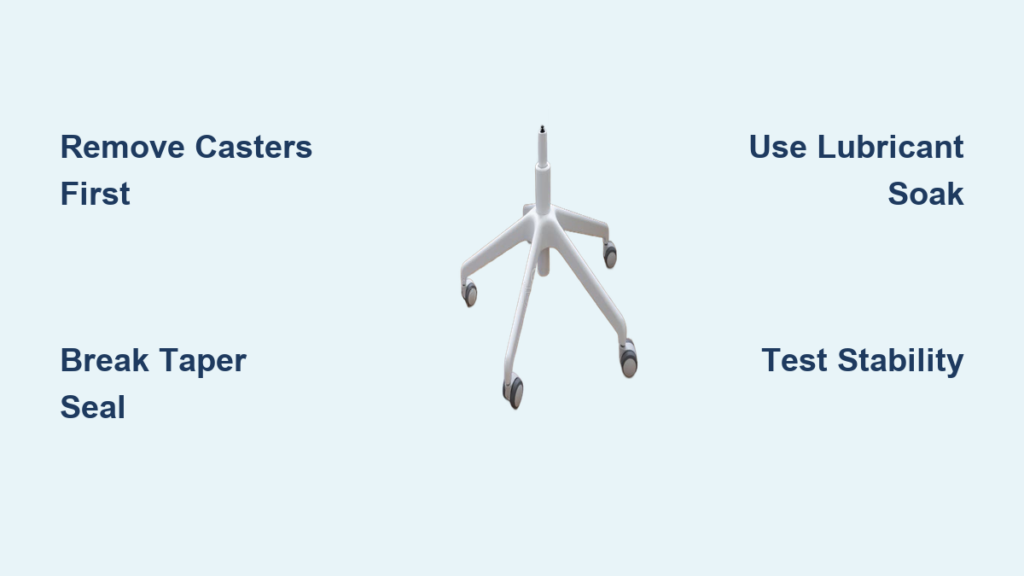
Taking the wheels off gives full access to hidden debris. Most office chairs use snap-in casters that can be removed with minimal effort—if done correctly.
Stabilize the Chair Base
Hold the chair upside down on a flat surface. Have someone help hold the legs, or secure them yourself using tape, rope, or a clamp. This prevents spinning when prying off wheels.
Pry Off with a Flathead Screwdriver
Locate the small retaining clip at the base of the caster stem. Insert a flathead screwdriver under the edge of the wheel housing. Gently lift upward to release the clip. Once loose, pull the wheel straight off.
Warning: Never force the wheel. Excessive pressure can crack plastic stems or housings. If stuck, wiggle gently while lifting.
Repeat for all wheels, placing them aside for cleaning.
Deep Clean Each Wheel

Now that the wheels are removed, clean them thoroughly to eliminate embedded grime and leftover hair fragments.
Soak in Warm Soapy Water
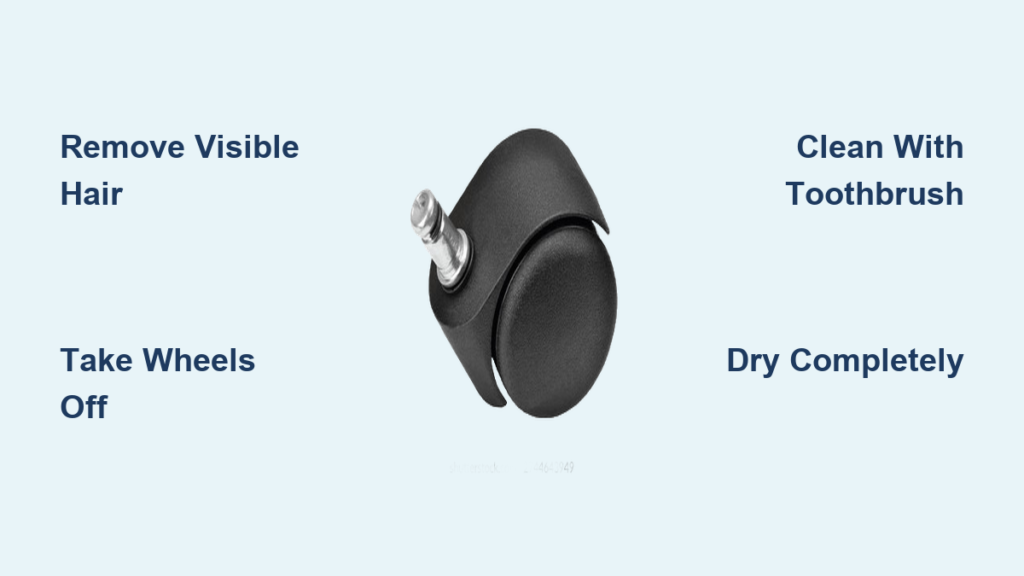
Fill a bowl with warm water and a few drops of dish soap. Submerge each wheel for 5–10 minutes. This loosens dried dirt and softens tangled fibers so they’re easier to scrub away.
Scrub with an Old Toothbrush
After soaking, use a soft-bristled toothbrush to scrub every groove and crevice. Focus especially on the inner axle area where hair accumulates. Rotate the wheel as you brush to reach all angles.
Visual Cue: Look for dark, stringy residue—this is degraded hair mixed with dust. Keep brushing until the water runs clear and no debris remains.
Rinse each wheel under clean water and dry completely with a microfiber cloth or paper towel. Let air-dry for 10–15 minutes before reattaching.
Clean the Caster Stem and Housing

Hair doesn’t just stick to the wheels—it also wraps around the metal stem and collects inside the housing. Skipping this step means faster re-clogging.
Wipe Down the Stem
Use a damp rag to wipe the exposed caster stem. For stubborn buildup, take a small pocket box cutter and carefully scrape along the shaft. Always cut away from your body and use a cutting mat for safety.
Safety First: Keep fingers behind the blade. Even minor slips can cause injury.
Dry the stem completely after cleaning.
Remove and Clean the Housing (If Applicable)
Some models have a removable plastic ring (housing) around the stem. If yours does, gently pop it off and wash it in soapy water. Scrub with a toothbrush, rinse, and dry fully before reassembly.
Reinstall Wheels Correctly
Proper reattachment ensures smooth rolling and prevents wobbling or misalignment.
Slide Wheel Back Onto Stem
Align the wheel with the caster stem and push it straight on. Apply firm, even pressure until you hear a click—this means the retaining clip has snapped into place.
Troubleshooting Tip: If the wheel won’t seat, check for leftover debris on the stem or inside the wheel. Never force it; misalignment can break the clip.
Repeat for all wheels, ensuring each is fully secured.
Test Chair Movement Thoroughly
After reassembly, test performance before returning to regular use.
Roll in All Directions
Place the chair upright on a hard floor. Push it forward, backward, and side-to-side. It should glide smoothly without resistance or squeaking.
If movement feels stiff:
• Double-check that all wheels are properly seated
• Inspect for missed hair strands still caught in axles
• Confirm no cleaning residue remains inside the mechanism
A well-cleaned chair will move silently and effortlessly.
Prevent Future Hair Buildup

Avoid repeating the process every few weeks with simple preventive habits.
Vacuum Under Chair Monthly
Dust and loose hair accumulate beneath your workspace. Use a vacuum with a crevice tool to clean under and around the chair base at least once a month.
Use a Chair Mat
Place a hard-surface chair mat under your desk. It creates a barrier between the floor and casters, reducing debris intake and protecting flooring.
Inspect Wheels Weekly
Take 30 seconds weekly to spin each wheel and check for early tangles. Removing small clumps immediately stops them from becoming major blockages.
Pro Tip: Keep a pair of tweezers or small scissors at your desk for quick mid-week cleanups.
Avoid Common Cleaning Mistakes
Even with the right steps, mistakes can damage your chair or shorten caster life.
Don’t Use Harsh Chemicals
Bleach, ammonia, or abrasive cleaners can degrade plastic wheels and rubber coatings. Stick to mild dish soap and water—it’s effective and safe.
Never Skip Drying
Reassembling wet wheels traps moisture against metal stems, which may lead to rust over time. Always dry components fully before reattaching.
Don’t Force Misaligned Parts
If a wheel won’t click back on, don’t hammer or press harder. Misalignment often means debris is still present or the orientation is wrong. Investigate first.
Troubleshoot Stiff or Noisy Wheels
Even after cleaning, issues may persist. Here’s how to diagnose and fix them.
Check for Leftover Debris
Remove the wheels again and re-inspect the axle and housing. Sometimes fine hair strands remain invisible until they swell with moisture.
Verify Wheel Alignment
Ensure all wheels point straight forward when installed. A twisted caster can cause dragging or uneven wear.
Look for Damaged Components
Cracks in the wheel, bent stems, or broken retaining clips mean replacement is needed. Most office chairs use universal 2-inch dual-wheel casters available online for under $10.
Replacement Tip: When buying new wheels, choose carpet-specific or hard-floor variants based on your workspace surface.
Dispose of Hair Responsibly
Hair removed from casters shouldn’t go down the drain or into open trash.
Seal in a Ziploc Bag
Place all collected hair in a sealed plastic bag before disposal. This prevents it from re-entering the environment, clogging drains, or wrapping around other objects.
Eco Note: Do not compost human or pet hair if using chemical shampoos or flea treatments—these can harm soil health.
Extend Chair Lifespan with Regular Care
Clean casters do more than improve mobility—they protect your entire chair.
Reduce Strain on Mechanism
Clogged wheels force the caster joints to work harder, leading to premature wear. Regular cleaning reduces stress and extends durability.
Protect Flooring
Dirty wheels grind debris into hardwood, laminate, or tile, causing scratches and dulling finishes. Clean casters roll cleanly and safely.
Maintain Smooth Ergonomics
A chair that rolls freely supports healthy posture and movement during long work sessions. Stiff chairs encourage slouching and discomfort.
Frequently Asked Questions About Removing Hair from Office Chair Wheels
Why won’t my office chair roll even after cleaning?
Check that all wheels are properly reattached and aligned. Leftover hair inside the axle or housing may still be blocking movement. Remove and re-clean each wheel if necessary.
Can I clean office chair wheels without removing them?
You can pull out visible hair, but full cleaning requires removal. Without taking them off, you can’t access the stem or housing where most hair accumulates.
What tools do I need to remove hair from chair wheels?
You’ll need a flathead screwdriver, old toothbrush, warm soapy water, pliers, and a rag. A pocket box cutter helps with stubborn debris on the stem.
How often should I clean my office chair wheels?
Clean every 1–3 months depending on environment. If you have pets or long hair, inspect weekly and clean monthly.
Are all office chair wheels removable?
Most are, especially on modern chairs. They typically use a snap-in caster system. If wheels don’t come off easily, check manufacturer specs—some high-end models use integrated casters.
Can hair buildup damage my office chair?
Yes. Tangled hair increases friction, wears down casters, strains joints, and can scratch floors. Regular cleaning prevents long-term damage.
Key Takeaways for Removing Hair from Office Chair Wheels
• Start with manual removal—pull out visible hair before disassembling
• Remove wheels safely using a screwdriver and proper stabilization
• Deep clean with soapy water and a toothbrush, focusing on axles and grooves
• Clean stems and housing to prevent rapid re-clogging
• Dry all parts completely before reattaching to avoid rust
• Prevent future buildup with weekly checks, chair mats, and monthly vacuuming
Make wheel maintenance part of your routine. With just a few common tools and under 20 minutes of effort, you can keep your office chair rolling smoothly for years.