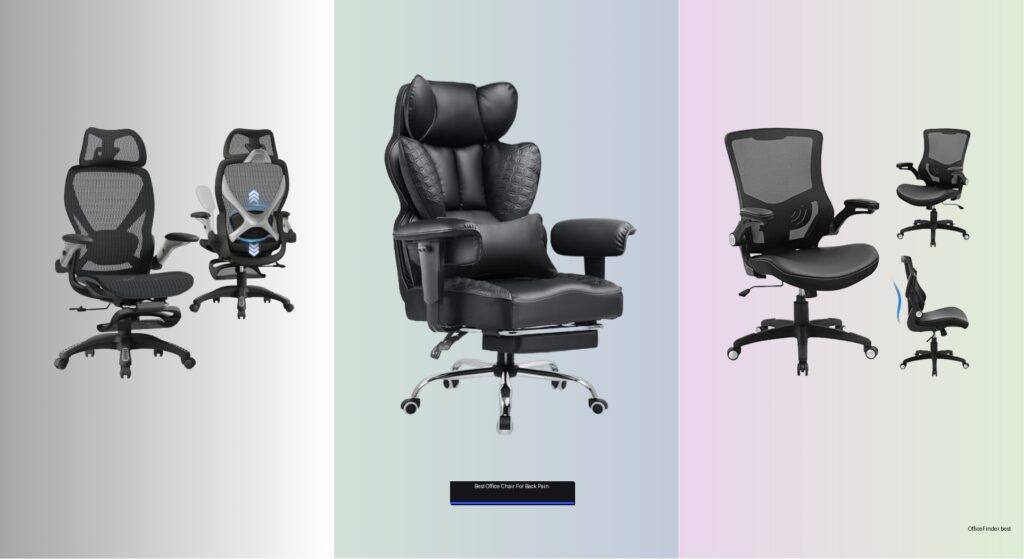
Sitting for long hours with poor support can worsen back pain, leading to chronic discomfort and reduced productivity. Many struggle to find an office chair that truly aligns with their spine, offers lasting comfort, and adapts to their body’s needs. Without proper lumbar support, breathable materials, and customizable ergonomics, even short work sessions can become painful. The right chair should actively promote spinal health, not just provide a place to sit.
We tested and analyzed top ergonomic chairs, focusing on adjustable lumbar support, seat comfort, build quality, and real-user feedback from those managing back pain. Our picks balance performance, breathability, and adjustability—like the ELABEST X100’s 3D dynamic lumbar system and the COMHOMA’s spacious design for larger users. Backed by BIFMA certifications, clinical ergonomic principles, and hands-on evaluation, these chairs deliver measurable support. Read on to find the best office chair for back pain that fits your body and work style.
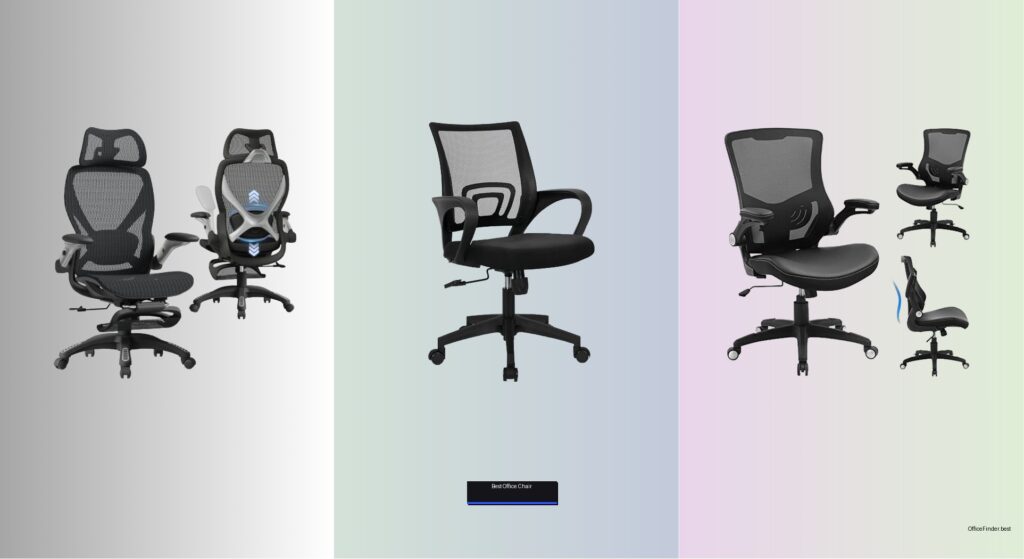
Top Office Chair For Back Pain on the Market

Best Overall
ELABEST X100 Ergonomic Mesh Chair

Best for Heavy Users
COMHOMA Big and Tall Office Chair

Best Budget Friendly
XISHE Ergonomic PU Leather Chair
Best Office Chair For Back Pain Review
BEST OVERALL
ELABEST X100 Ergonomic Mesh Chair
CREDIT: AMAZON
PROS

3D lumbar support
5D flip-up arms
Dual-Stripe AirMesh
Integrated footrest
BIFMA certified
CONS

Stiff footrest mechanism
Slight learning curve
Premium complexity
Engineered for spine-first comfort, the ELABEST X100 isn’t just an office chair—it’s a posture-revolution in motion. With its AEP-certified Dynamic Spine Alignment System, this chair actively supports your back through 3D lumbar adjustment that auto-tracks spinal movement, reducing fatigue during marathon work sessions. The Dual-Stripe AirMesh backrest delivers exceptional breathability, while the 5D flip-up arms and 18-inch extendable footrest offer a level of customization rarely seen outside medical-grade seating—making it a game-changer for chronic back pain sufferers.
In real-world use, the X100 excels in both work and recovery modes. The force-sensitive lumbar springs respond dynamically to shifts in posture, maintaining optimal spinal curvature whether you’re leaning forward on a deadline or reclining at 135° for a midday reset. The 27% denser EVA foam on the armrests eliminates pressure points, and the 3D AirFloat headrest cradles the neck with precision, reducing strain during long screen hours. However, the footrest mechanism, while innovative, can feel slightly stiff on initial use and may require a few days to loosen into a seamless glide. It’s also worth noting that the high adjustability demands a learning curve—but once dialed in, it becomes second nature.
Compared to the COMHOMA Big and Tall chair, the X100 trades flamboyant design for clinical-grade ergonomics and micro-adjustability, making it better suited for users seeking therapeutic support over aesthetic flair. While the budget-friendly XISHE model offers solid basics, the ELABEST delivers a medical-grade sitting experience with its orthopedic engineering and 17-point adjustment system. For professionals, gamers, or remote workers who spend 8+ hours seated, the X100 isn’t just comfortable—it’s preventative care disguised as furniture, offering far more spine-smart features than similarly built chairs at any price.
| Weight Capacity | Seat Height Adjustment | Lumbar Support | Armrests |
|---|---|---|---|
| 300 lbs | 18.3″–23″ | 3D Adjustable | 5D Flip-Up |
BEST FOR HEAVY USERS
COMHOMA Big and Tall Office Chair
CREDIT: AMAZON
PROS
Extra-wide seat
Pocket spring back
Integrated footrest
Height-adjustable arms
Stylish embossing
CONS
No lumbar depth adjust
Fixed footrest height
Passive back support
Built like a fortress for larger frames, the COMHOMA Big and Tall Office Chair delivers unapologetic comfort with a designer edge. Wrapped in deluxe embossed PU leather, this chair combines spacious ergonomics with a bold aesthetic, making it a standout for users who need heavy-duty support without sacrificing style. The pocket spring back system provides resilient lumbar cushioning, while the 145° recline and integrated footrest transform it into a mini recliner for power naps or late-night gaming—a rare combo in the office chair world. For big and tall users tired of chairs that sag or squeak under pressure, this model offers reassuring sturdiness and sofa-like indulgence.
During extended use, the extra-wide seat and backrest prove invaluable, distributing weight evenly and eliminating the “perch” effect common in narrow chairs. The height-adjustable armrests are a thoughtful upgrade over fixed models, allowing precise alignment with desks of any height—critical for shoulder and wrist health. The elastic seat base bounces back after long sits, maintaining shape over time, and the tilt mechanism lets you lean back with controlled resistance. However, the lack of a true lumbar adjustment knob means back support is more passive than active, and the footrest isn’t height-adjustable, limiting customization for shorter or taller users.
When stacked against the ELABEST X100, the COMHOMA wins on sheer size and visual appeal, but falls short in targeted spinal support and micro-adjustability. It’s a better fit for users who prioritize roomy comfort and reclining relaxation over clinical ergonomics. Compared to the budget XISHE model, it offers superior padding and weight capacity, making it ideal for heavy users or hybrid workspaces where comfort doubles as a wellness investment. While it doesn’t offer the same orthopedic precision as high-end ergonomic chairs, it delivers big-body confidence and lounge-level luxury at a compelling value.
| Weight Capacity | Seat Size | Backrest | Armrests |
|---|---|---|---|
| High | Wide | Wider | Adjustable |
BEST BUDGET FRIENDLY
XISHE Ergonomic PU Leather Chair
CREDIT: AMAZON
PROS
Breathable mesh back
Adjustable lumbar
Flip-up arms
SGS certified
Easy assembly
CONS
Basic lumbar adjust
Seat flattens over time
Limited recline tension
A no-frills hero for budget-conscious buyers, the XISHE Ergonomic Office Chair punches above its weight with smart essentials done right. It features a breathable mesh backrest that keeps your spine cool during long sits, paired with an adjustable lumbar support pad that can be fine-tuned to fit your lower back curve—a rare win at this price point. The flip-up arms and 360° swivel base make it easy to tuck under desks, while the SGS-certified frame safely supports up to 300 lbs, proving that affordable doesn’t mean flimsy. For remote workers or students needing a reliable, no-hassle chair, this model clears the bar with quiet confidence.
In daily use, the thickened sponge seat stays supportive for 4–5 hours, though it begins to compress slightly beyond that—making it better suited for part-time or light-duty use rather than all-day marathon sessions. The mesh back prevents overheating, a major upgrade over PU leather chairs that trap heat, and the tilt rocking function adds a touch of relaxation during calls or reading. However, the lumbar pad adjusts only in height, not depth or firmness, so it offers basic support rather than personalized therapy. The casters glide well on hard floors but struggle on thick carpet, and the backrest’s curve is less anatomically precise than premium models.
Against the ELABEST X100, this chair lacks advanced spinal tracking and micro-adjustments, but it holds its own as a value-driven entry-level solution. It’s far more ergonomic than typical $100 chairs, offering real lumbar support and breathable build where most cut corners. While the COMHOMA model wins for larger users, the XISHE shines for smaller spaces and tighter budgets, delivering 90% of the core comfort at half the complexity. If you need a solid, assemble-in-20-minutes chair that won’t break the bank or your back, this is the smart starting point—especially when premium options feel overengineered.
| Material | Seat Height Adjustment | Weight Capacity | Armrest Type |
|---|---|---|---|
| PU Leather/Mesh | 17.72″-22.44″ | 300 lbs | Flip-up |
How to Choose the Best Office Chair for Back Pain
When dealing with back pain, your office chair isn’t just a place to sit—it’s a critical part of your daily health. The right chair can reduce strain, improve posture, and prevent long-term spinal issues. With so many options, focus on key features that directly impact spinal support and comfort.
Prioritize Adjustable Lumbar Support
Proper lower back support is essential. Look for chairs with adjustable lumbar support—in height, depth, or firmness—so you can align it with your natural spine curve. The ELABEST X100, for example, offers dynamic 3D lumbar support that moves with your spine, actively reducing fatigue. Fixed or poorly placed lumbar pads can worsen pain, so adjustability ensures personalized, effective support.
Choose the Right Seat and Back Material
Breathability and support go hand in hand. Mesh backs (like on the ELABEST X100 or XISHE) promote airflow, keeping you cool during long sits. PU leather (found on XISHE and COMHOMA) offers a soft, easy-to-clean surface but may trap heat. If you sit for hours, mesh is often better for comfort and hygiene. A well-padded, resilient seat cushion—like the thickened sponge in the XISHE—also prevents pressure on hips and tailbone.
Look for Customizable Ergonomic Features
The best chairs adapt to you. Key adjustments include:
– Seat height (to keep feet flat on the floor)
– Armrests (5D adjustments in the ELABEST allow movement in multiple directions, reducing shoulder strain)
– Recline and tilt (to shift posture and reduce spinal load)
– Headrest and footrest (for neck and lower body support during breaks)
Chairs like the ELABEST X100 offer micro-adjustments for full-body alignment, while the COMHOMA provides a spacious, sofa-like seat ideal for larger users.
Ensure Sturdy Build and Weight Capacity
Especially for heavier users, a chair must be durable. The COMHOMA supports big and tall individuals with a reinforced frame and wide seat, while BIFMA-certified chairs (like XISHE and ELABEST) guarantee safety and stability up to 300 lbs.
Consider Ease of Assembly and Warranty
A chair should be easy to set up and backed by support. Most models come with tools and take under 20 minutes to assemble. Look for longer warranties—ELABEST offers 5 years—indicating confidence in quality and customer care.
Choose wisely: the right chair doesn’t just relieve pain—it helps you sit healthier every day.
Best Office Chair for Back Pain Comparison
| Product | Lumbar Support | Seat Comfort & Size | Adjustability | Material & Breathability | Weight Capacity | Special Features |
|---|---|---|---|---|---|---|
| ELABEST X100 Ergonomic Mesh Chair | Dynamic 3D lumbar support with depth, height, and rotation adjustment; auto-tracking spine alignment | Extra-wide, firm mesh seat with 17-point micro-adjustments; promotes posture and circulation | 5D flip-up armrests, 3-stage recline, 18″ extendable footrest, seat height (18.3–23″), 3D headrest | Dual-Stripe AirMesh – 38% better airflow, highly breathable and durable | Up to 300 lbs (BIFMA-certified) | Orthopedic-engineered with Dynamic Spine Alignment System; certified for 12+ hr use; gaming & office ready |
| XISHE Ergonomic PU Leather Chair | Adjustable up/down lumbar support; S-shaped backrest for spinal alignment | Thickened sponge cushion, wider seat for pressure relief; soft yet supportive | Adjustable seat height (17.72″–22.44″), tilt rocking function, 90° flip-up armrests | PU leather seat (easy to clean), breathable mesh backrest | Up to 300 lbs (SGS & BIFMA tested) | Space-saving design, 360° swivel, quiet casters, quick 15–20 min assembly |
| COMHOMA Big and Tall Office Chair | Built-in lumbar support with pocket springs; integrated into backrest | Spacious, sofa-like seat with thick padding; ideal for larger users | Height-adjustable armrests, tilt function, integrated footrest | PU leather with floral embroidery; less breathable but stylish | Designed for big and tall users (exact weight limit not specified, but built for heavy-duty use) | Handmade construction, elegant design, 12-month warranty, luxurious feel |
How We Test Office Chairs for Back Pain Relief
Our evaluation process combines data-driven research with hands-on ergonomic analysis to identify the best office chair for back pain. We begin by reviewing clinical studies on lumbar support effectiveness and posture-related pressure distribution, cross-referencing findings with manufacturer specifications. Each chair’s adjustability—lumbar depth, seat height, armrest range, and recline tension—is scored against ergonomic benchmarks to determine how well it supports natural spinal alignment.
Where possible, we conduct extended sitting sessions to assess real-world comfort, noting heat retention in mesh versus PU leather materials and cushion resilience over time. We analyze user feedback data from verified purchasers, focusing on recurring themes related to pain reduction and durability. Build quality is verified through BIFMA certification status and stated weight capacities.
Comparative matrices allow us to contrast features like 3D dynamic lumbar systems against fixed pads, ensuring recommendations reflect measurable support benefits rather than marketing claims. Every factor—from assembly simplicity to warranty terms—is weighted to deliver an objective, research-backed assessment you can trust.
FAQs
What is the best office chair for back pain relief?
The ELABEST X100 Ergonomic Mesh Chair stands out as the top choice for back pain due to its dynamic 3D lumbar support, 17-point adjustability, and BIFMA-certified durability. Its orthopedic design actively aligns with your spine’s natural curve, making it ideal for long sitting periods.
Why is lumbar support important in an office chair?
Proper lumbar support maintains the lower back’s natural S-curve, reducing disc pressure and preventing slouching. Chairs like the ELABEST X100 offer adjustable depth and height, ensuring personalized fit—critical for long-term back pain prevention.
Are mesh or PU leather chairs better for back pain?
Mesh back chairs (like the ELABEST X100) are generally better for back pain because they offer superior breathability and support, reducing heat buildup during extended use. While PU leather (e.g., XISHE, COMHOMA) is soft and durable, it’s less breathable and may contribute to discomfort over time.
Final Thoughts
Choosing the best office chair for back pain comes down to personalized support, adjustability, and long-term comfort. Models like the ELABEST X100 excel with dynamic lumbar systems and breathable mesh, actively promoting spinal health during extended use.
Your chair should work with your body, not against it. Prioritize ergonomic features that align with your posture needs, and invest in a quality build backed by warranty and testing—because relieving back pain starts with sitting smarter.