Is your office chair dragging, squeaking, or scratching your hardwood floor? The culprit is likely worn-out casters. Learning how to remove casters from office chair legs is a quick DIY fix that can restore smooth rolling and protect your flooring. Whether you’re upgrading to floor-friendly wheels, replacing broken rollers, or storing your chair, removing casters takes under 10 minutes and usually requires no special tools. This guide walks you through every step—from identifying your caster type to cleaning the base—so you can work safely and avoid damaging your chair.
You’ll learn how to distinguish between threaded and press-fit casters, use the right tools without stripping parts, and avoid common mistakes like cracking plastic hubs. We’ll also cover how to inspect, clean, and prep for new casters so your chair rolls like new. No guesswork, no frustration—just a clear, step-by-step process that anyone can follow.
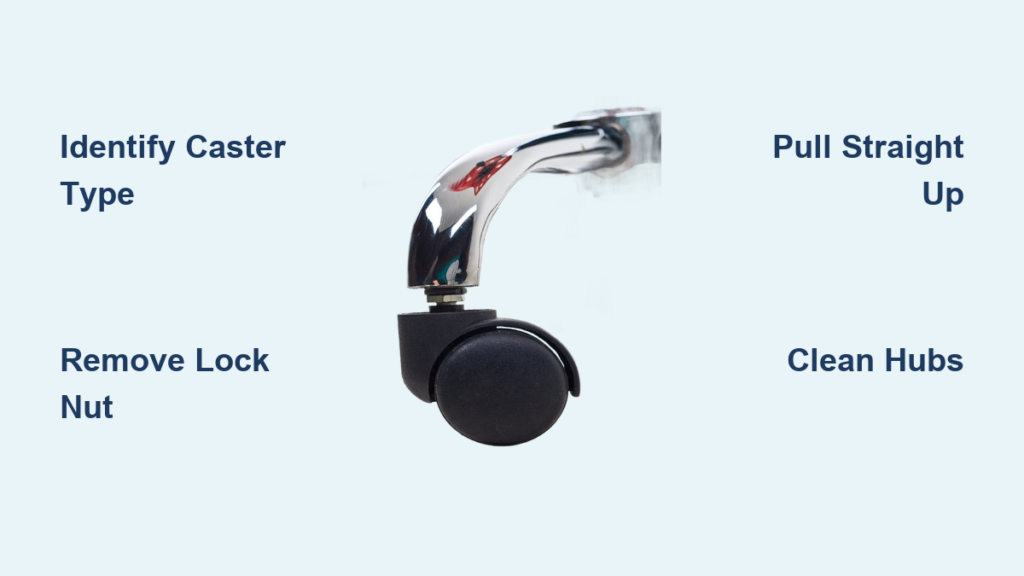
Identify Your Caster Type

Knowing your caster attachment method is critical before applying force. Use the wrong technique and you risk damaging the chair base or stem. Most office chairs use one of two systems—check yours before proceeding.
Threaded Stem with Lock Nut
These casters screw into the base and are secured from underneath with a metal nut. The stem looks like a bolt and threads into the hub. A lock nut holds it tight.
How to confirm: Flip the chair over. If you see a nut under the base around the stem, it’s a threaded caster.
Press-Fit (Snap-In) Casters
These rely on friction to stay in place. The stem is smooth or slightly ribbed and snaps into a plastic or metal hub. No nuts or screws are used.
How to confirm: No hardware under the base—just a wheel stem inserted directly into the hole.
Warning: Never try to unscrew a press-fit caster. You’ll damage the hub. Likewise, don’t pry a threaded caster without removing the nut first.
Prepare the Chair Safely
Working safely prevents injury and damage to your chair’s finish or base.
Flip the Chair on a Soft Surface
Turn the chair upside down on carpet, a yoga mat, or folded towels. This protects the seat fabric and prevents the base from scratching the floor.
Protect the Base with a Cloth
Place a clean towel under the base, especially if working on a hard countertop. This cushions metal or plastic parts and prevents scuffs.
Clear and Light Your Workspace
Make sure you can easily reach all five legs. Use a bright lamp or flashlight to inspect mounting holes and spot debris or hardware.
Remove Threaded Casters with Nuts
If your casters are held by nuts, follow these steps to remove them without damage.
Loosen the Lock Nut Under the Base
Use an adjustable wrench or socket to grip the nut. Turn it counterclockwise to loosen. If the caster spins, hold the stem steady with pliers.
Pro tip: Spray penetrating oil (like WD-40) on the nut if it’s rusted. Wait 5–10 minutes before trying again.
Unscrew the Caster Stem by Hand
Once the nut is off, grip the wheel assembly and twist it counterclockwise. Pull straight down as you turn.
Warning: If the stem won’t budge, don’t force it. Reapply lubricant and wait. Forcing can strip internal threads.
Remove and Save All Hardware
Set aside the caster, nut, and any washers. Keep them together in a labeled bag—they’ll be needed if you reinstall or replace casters.
Extract Press-Fit Casters Without Damage
Snap-in casters don’t have nuts, but they can be tight. Use the right method to avoid cracking the hub.
Pull with Needle-Nose Pliers
Grip the stem near the base with pliers. Pull straight up with steady, even pressure. Don’t yank or twist.
Alternative: If the stem is too short, loop a zip tie or strong string through the wheel fork and pull upward.
Use a Flathead Screwdriver to Pry Evenly
Slide the screwdriver under the caster’s collar (where it meets the base). Gently lever it up, rotating the tool around the stem to apply balanced pressure.
Key rule: Never twist while prying. This can crack the plastic hub or deform the hole.
Try the Towel Twist Method for Stubborn Casters
Wrap a thick towel around the stem for grip. Hold the base firmly and twist the towel upward. The friction helps pull the caster out without tools.
Clean and Inspect Mounting Holes
Now that the casters are out, clean and check the hubs to ensure new ones install smoothly.
Check for Hair, Dust, and Debris
Look into each hole. Carpet fibers, pet hair, and dust often clog the hub and prevent proper seating.
Clean with a Swab or Compressed Air
Use a dry cloth, cotton swab, or canned air to remove buildup. For sticky residue, wipe with a slightly damp cloth and dry immediately.
Inspect for Damage
Look for:
– Cracks in plastic hubs
– Stripped threads (on threaded models)
– Loose or wobbly mounting points
If damage is found: Use thread locker on metal bases or replace the entire wheel base if plastic hubs are cracked.
Common Mistakes to Avoid
Even simple jobs go wrong with the wrong approach. Avoid these errors.
Using Too Much Force
Yanking or hammering can crack the base. Always use steady, upward pressure—especially on plastic hubs.
Losing Nuts and Washers
Threaded casters use small hardware. Keep them in a labeled bag to avoid losing them.
Mixing Caster Types
Never install threaded casters into press-fit holes or vice versa. They’re not interchangeable. Measure the stem diameter and length before buying replacements.
Skipping the Cleaning Step
Installing new casters into dirty hubs causes wobbling and early failure. Always clean first.
When to Replace vs. Reuse Casters
Removing casters doesn’t always mean replacing them.
Reuse If:
• Wheels roll smoothly
• No cracks in the stem or housing
• No squeaking or grinding
• Rubber coating is intact (protects floors)
Replace If:
• Wheels are cracked, flat, or stuck
• They scratch hardwood or tile
• You’re switching from carpet to hardwood (or vice versa)
• The stem is bent or stripped
Upgrade tip: Install hard floor casters (softer polyurethane) for wood or tile, or carpet casters (larger, deeper wheels) for thick rugs.
Installing New Casters (Quick Guide)

Once old casters are out, installing new ones is fast and easy.
For Threaded Casters
- Insert the stem into the hole from above.
- Screw it in clockwise by hand until snug.
- Flip the chair and secure with the nut underneath.
Tighten firmly, but don’t over-torque—this can crack plastic bases.
For Press-Fit Casters
- Align the stem with the hole.
- Push straight down with firm, even pressure.
- You should hear a soft click when fully seated.
Pro tip: Apply a tiny drop of silicone spray to the stem before inserting—it eases installation and prevents sticking later.
Maintenance Tips to Extend Caster Life
Keep your chair rolling smoothly with simple habits.
• Clean wheels monthly with a damp cloth or toothbrush to remove hair and lint
• Rotate your chair regularly to prevent uneven wear
• Use a chair mat on carpet or hardwood to reduce strain
• Check nut tightness every 3 months on threaded models—vibration can loosen them
Key Takeaways for Removing Office Chair Casters
Knowing how to remove casters from office chair bases gives you control over comfort, mobility, and floor protection. Whether you’re replacing damaged wheels or upgrading for hardwood floors, the process is fast and tool-light. Identify your caster type first—threaded or press-fit—then use the correct method to avoid damage. Clean the hubs, inspect for cracks, and always handle plastic parts with care.
Most removal jobs take less than 10 minutes. With casters off, you can install new ones, store the chair safely, or perform deeper maintenance. Keep old hardware in case you need it later.
Next step: Measure your old casters and shop for replacements suited to your floor type—your chair (and floors) will thank you.
Frequently Asked Questions About Removing Office Chair Casters
How do I know if my casters are threaded or press-fit?
Flip the chair over. If you see a nut under the base, it’s threaded. If the stem goes straight into the hub with no hardware, it’s press-fit.
Can I remove press-fit casters without tools?
Yes. Try the towel twist method—wrap a thick towel around the stem and pull upward with twisting motion. Friction helps pull it out.
Why won’t my caster come out?
It may be stuck from dirt, rust, or compression. For threaded casters, ensure the nut is removed. For press-fit, try pliers, a screwdriver, or lubricant on the stem.
Can I break the chair base while removing casters?
Yes, if you use excessive force or twist while prying. Always pull straight up and avoid prying on plastic hubs unless using even pressure.
Do I need to replace all five casters at once?
Yes, for even rolling and stability. Mixing old and new casters causes wobbling and uneven wear.
What size casters do I need for my office chair?
Measure the stem diameter and length of your old casters. Most are 7/16″ or 11mm diameter. Match this exactly when buying replacements.